

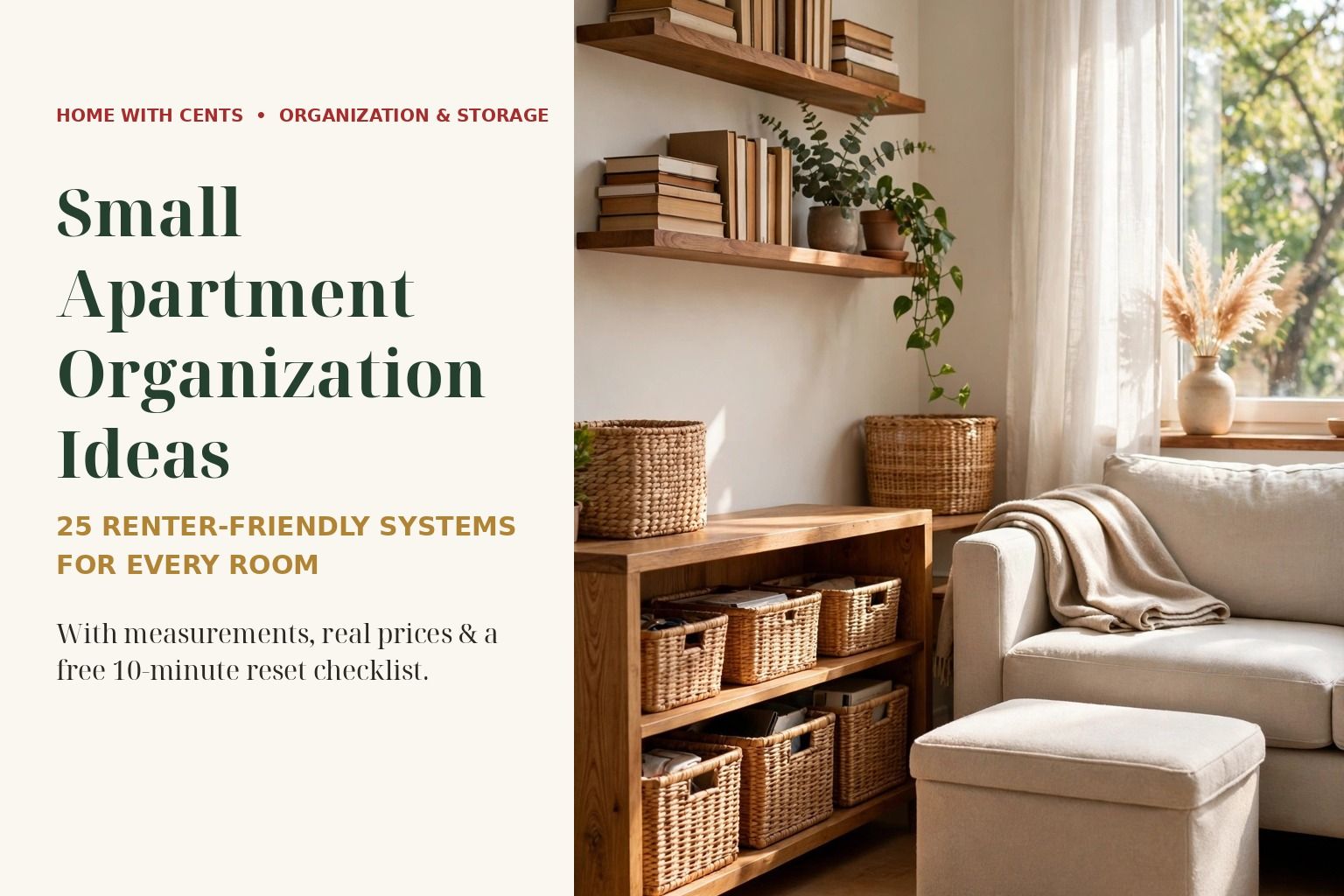
If your apartment always feels cluttered no matter how often you tidy, the problem is rarely the square footage. After organizing dozens of small rentals, I can tell you the real issue is almost always the same: your things don’t have systems, so every item becomes a daily decision. These small apartment organization ideas fix that. Each one is a simple, renter-friendly system — no drilling into walls you don’t own, no built-ins, no deposit-risky renovations — with the measurements and realistic prices you need to copy it this weekend.
The 25 ideas below are organized room by room, so you can start with whichever space stresses you out most. Every system works in a studio, a one-bedroom, or a small two-bedroom, and the full starter setup costs less than most people expect. Let’s start with the rules that make everything else work.
Before You Buy a Single Bin: The 5 Rules of Small-Space Organization
1. Measure first, buy second. The number one reason organization products get returned is depth. Standard kitchen cabinets are about 12 inches deep, most bookshelves are 10–12 inches, and the average bed frame leaves 6–7 inches of clearance underneath. Write your five key measurements — cabinet depth, closet width, under-bed clearance, door width, and the gap beside your toilet — in your phone before you shop. A bin that is half an inch too deep is just expensive clutter.
2. One category, one home. Chargers live in exactly one drawer. Mail lands in exactly one tray. When a category has two or three “homes,” you will always look in the wrong one, and every surface becomes a maybe-pile. This single rule is what separates an organized apartment from a tidy-for-a-day apartment.
3. Go vertical before you go bigger. In a small apartment, floor space is gold and wall space is wasted. The zone between your furniture tops and the ceiling — plus the backs of doors — can add the storage of an entire extra closet without taking up a single square foot of floor.
4. Closed storage beats open storage in small spaces. Open shelves look beautiful in photos, but every visible object adds visual noise, and in 500 square feet, noise reads as clutter. Baskets, lidded bins, and cabinets let a room hold twice as much while looking half as full.
5. Renter-safe means weight-rated. Adhesive hooks, tension rods, and over-door organizers are the renter’s best friends — but only when you respect their weight ratings. Check the rating on the package, stay under it, and let adhesive cure for the full time on the instructions before loading it. Your deposit will thank you.
Entryway Organization Ideas (1–4)
Your entryway is the pressure valve of the whole apartment. If coats, shoes, and mail explode here, the mess migrates inward. These four systems take under an hour total.
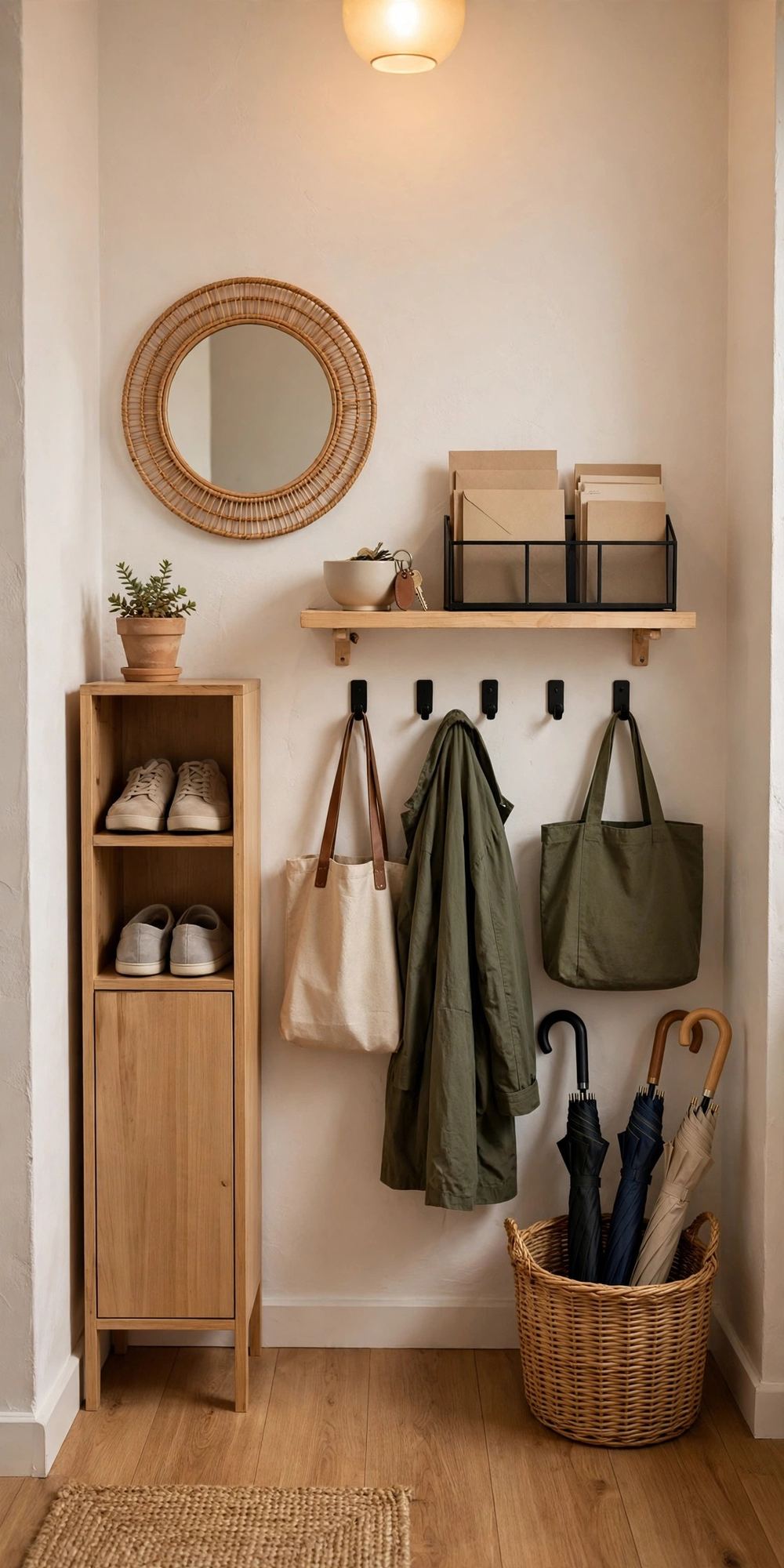
1. A slim shoe cabinet, not a shoe pile. A tilt-out shoe cabinet is typically only 9–10 inches deep, holds 6–10 pairs, and reads as a piece of furniture instead of a storage product. Measure your hallway width first: you need at least 24 inches of clear walkway left after it is placed.
2. A hook rail for the daily five. Coats, your work bag, a hat, the dog leash, and a tote — give the five things you grab daily a hook each. Adhesive or over-door hooks keep this fully renter-safe. When a sixth item appears, something has to leave. That limit is the system.
3. A landing strip with three containers. Clutter theory in one sentence: flat surfaces attract piles unless you pre-decide what lands there. A small tray or shelf with a key bowl, a mail sorter, and a tiny trash spot for receipts turns your entry into a processing station instead of a dumping ground. Empty the mail sorter every Sunday — it takes two minutes.
4. One basket for the overflow. Umbrellas, reusable shopping bags, and returns-to-store live in a single tall basket by the door. When the basket is full, that’s your signal to deal with it, not to buy a second basket.
Living Room Organization Ideas (5–8)
The living room does the most jobs in a small apartment — relaxing, working, hosting, exercising — so it needs storage that hides in plain sight.
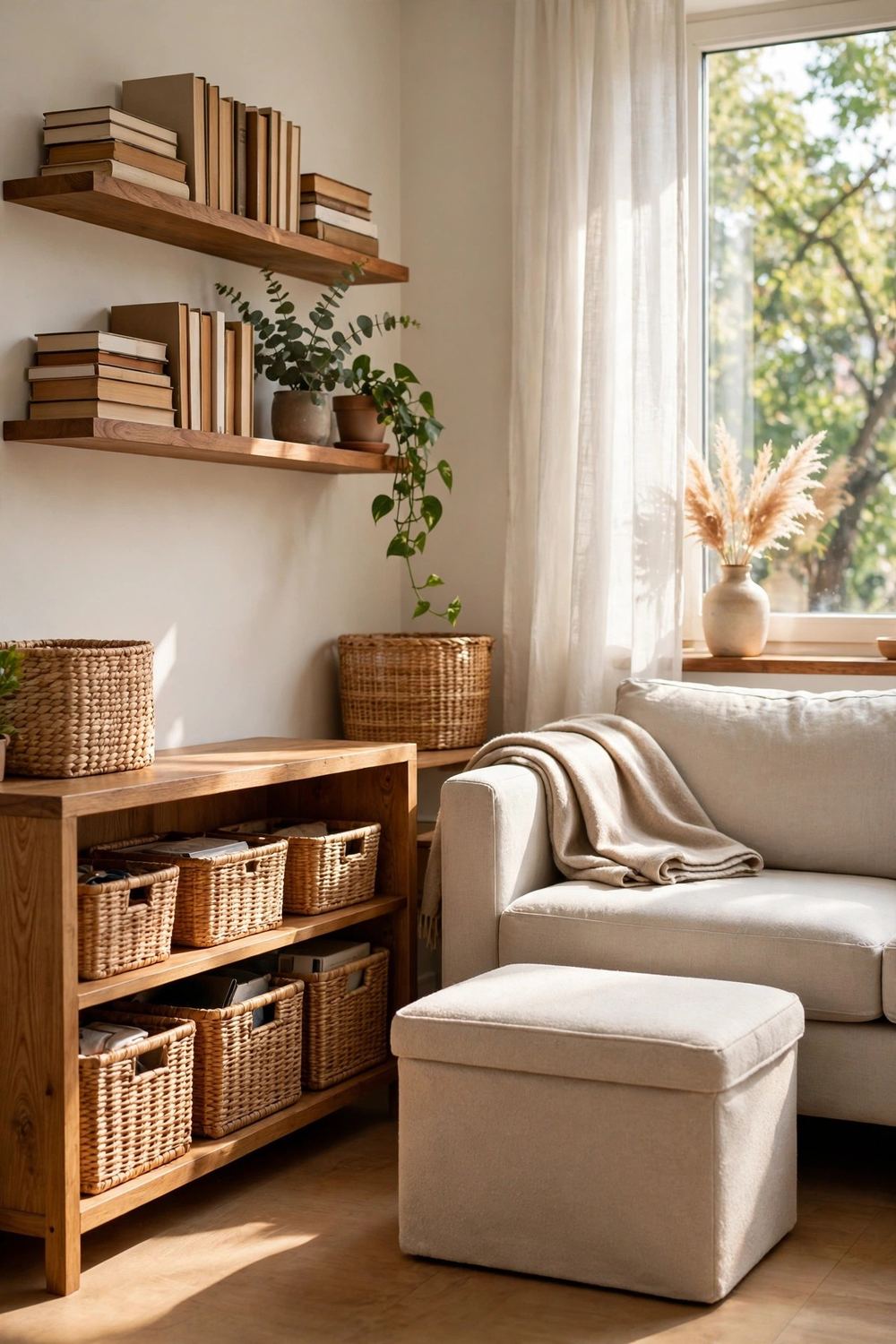
5. A storage ottoman as your coffee-table replacement. A storage ottoman holds blankets, board games, or workout gear, works as a footrest and extra seating, and softens a room full of hard rectangles. Look for one around 30 inches wide with a hinged or lift-off lid — roughly the footprint of a coffee table, with none of the surface-pile problem.
6. The basket bookcase system. A low bookshelf plus matching woven baskets is the hardest-working combo in small-space living. Assign each basket a category — tech and cables, hobby supplies, paperwork, pet things — and the shelf always looks styled, never stuffed. Matching baskets matter: visual sameness is what tricks the eye into seeing “decor” instead of “storage.”
7. Floating shelves in the dead zone. The wall space above a sofa or above a doorway typically holds nothing. One or two shelves there take books, plants, and display pieces off your limited surfaces. Renters: use the sturdiest adhesive picture ledges only for lightweight items, or get written permission for two small screw holes — many landlords allow them if you patch at move-out.
8. A remote and cord station. One small lidded box or drawer insert near the sofa for remotes, chargers, and earbuds ends the daily cable tangle. Add a $10 cable management box behind the TV stand and the whole room looks calmer instantly.
Kitchen Organization Ideas (9–13)
Small kitchens fail in predictable places: the cabinet avalanche, the spice hunt, the under-sink swamp. Fix these five zones and a tiny kitchen starts cooking like a bigger one. (If your dining corner needs the same treatment, these Christmas table setting ideas for a small dining table use the same fit-first thinking.)
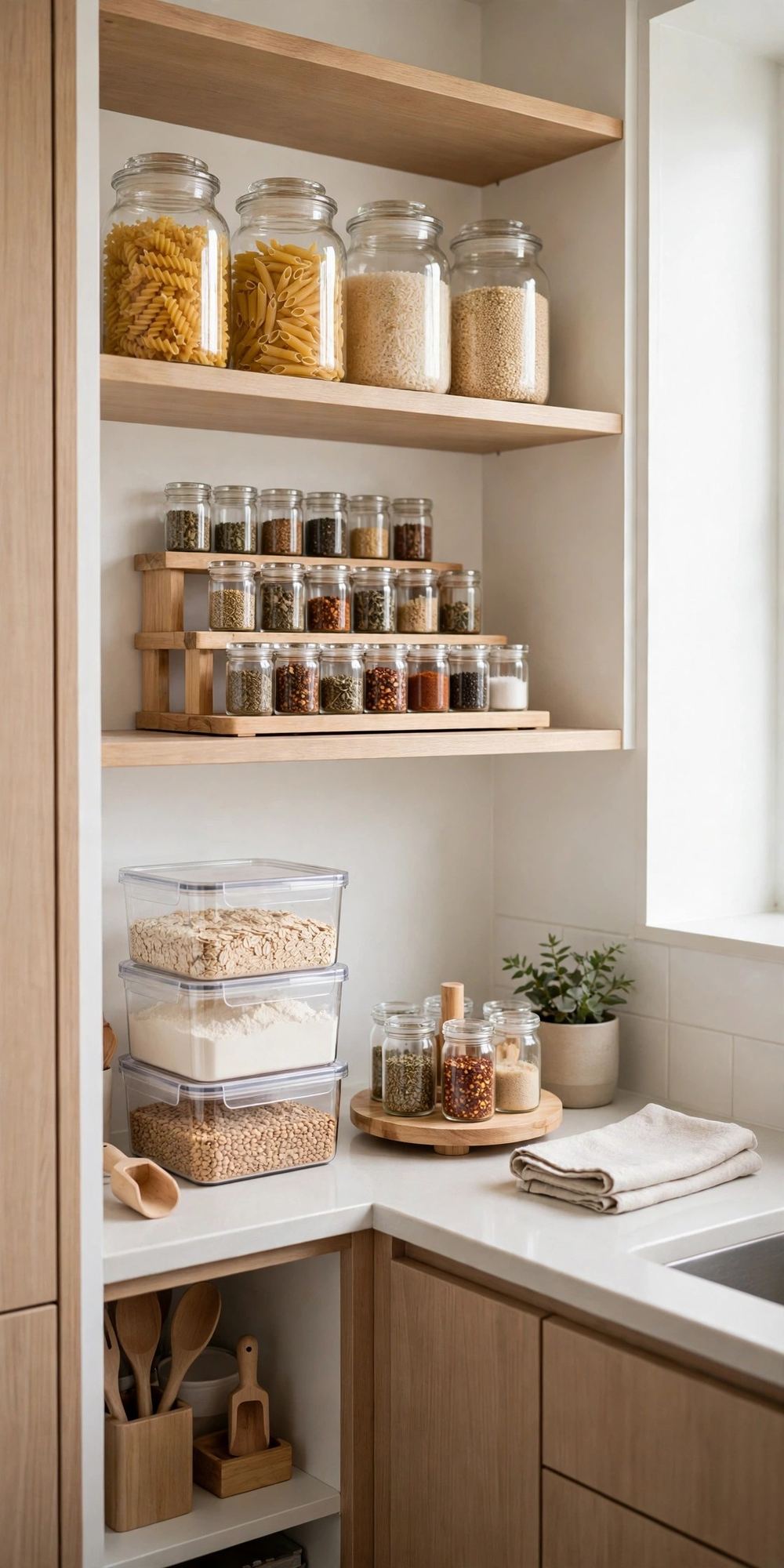
9. Shelf risers to double your cabinet height. Cabinets waste the top half of every shelf. A simple riser — usually 9–10 inches deep to suit a standard 12-inch cabinet — instantly creates two levels for mugs, bowls, or cans. Measure your tallest item’s clearance before buying; risers come in fixed and expandable widths.
10. Decant the daily dry goods into matching jars. Transfer pasta, rice, oats, and flour into uniform glass or clear jars and three good things happen: you can see what you have, everything stacks and lines up, and the cabinet looks calm. Keep the original bags of rarely used items in one labeled bin instead — decant only what you touch weekly.
11. A tiered spice riser (or a drawer insert). Spices stored in a single row hide behind each other, so you buy duplicates. A three-step riser keeps every label visible at a glance. No spare cabinet? A shallow drawer with a spice insert works even better and keeps them dark and cool.
12. A two-tier slider under the sink. The under-sink cabinet is deep, dark, and interrupted by pipes — exactly why things go there to be forgotten. A two-tier sliding organizer (look for one about 15 inches wide with a cutout-friendly top tier) brings everything forward: daily sprays on top, backups below. Add a small tension rod across the top to hang spray bottles by their triggers and you gain a free shelf.
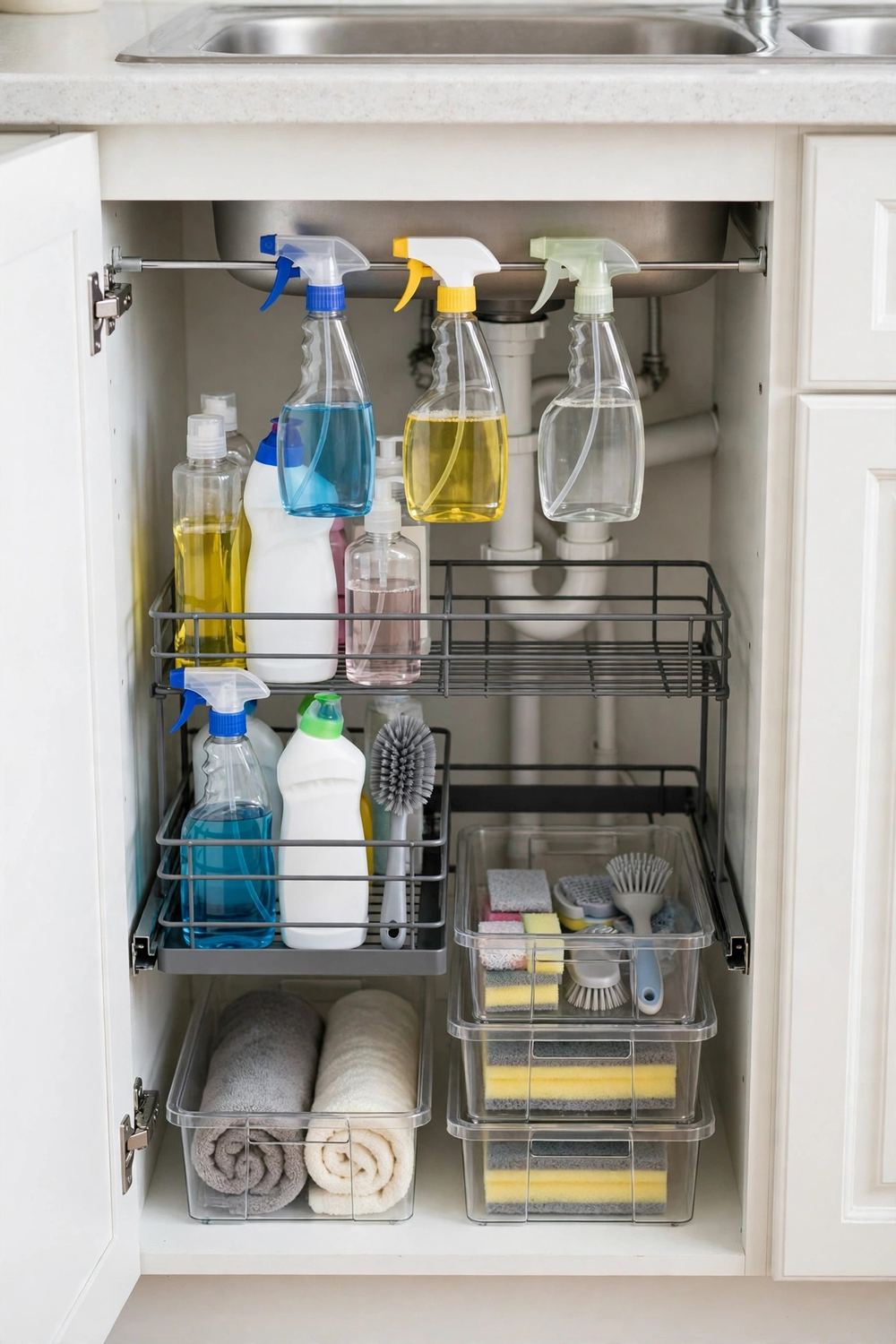
13. Use the inside of cabinet doors. Adhesive or over-door racks on the inside of cabinet doors hold lids, wraps, and measuring spoons in space that is currently doing nothing. Pot lids especially: a door rack ends the lid avalanche forever. Just confirm the door still closes with your shelf items in place — test with one item before committing.
Bedroom & Closet Organization Ideas (14–18)
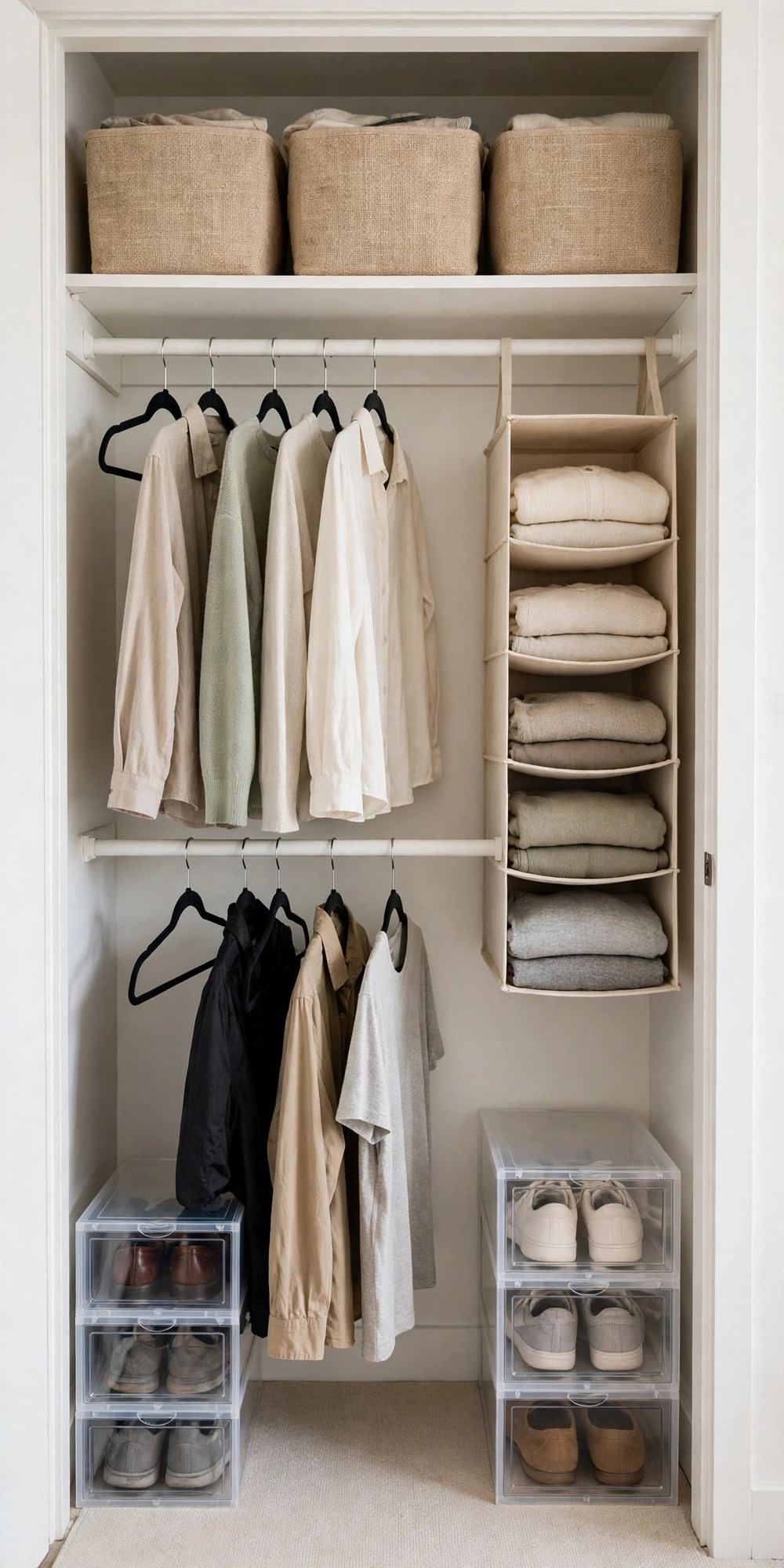
14. Double-hang your closet. Most small closets have one rod at eye level and a canyon of wasted space below it. A second tension rod or hanging rod at roughly 40 inches high doubles your hanging capacity for shirts, pants, and blouses. Keep only long dresses and coats on the tall section.
15. Switch to slim hangers. Bulky mixed hangers eat rod space and let clothes slide. Uniform slim velvet hangers typically save 30–40% of rod width compared with chunky plastic ones — in a 48-inch closet, that can mean 15 extra garments. It is the cheapest closet expansion that exists.
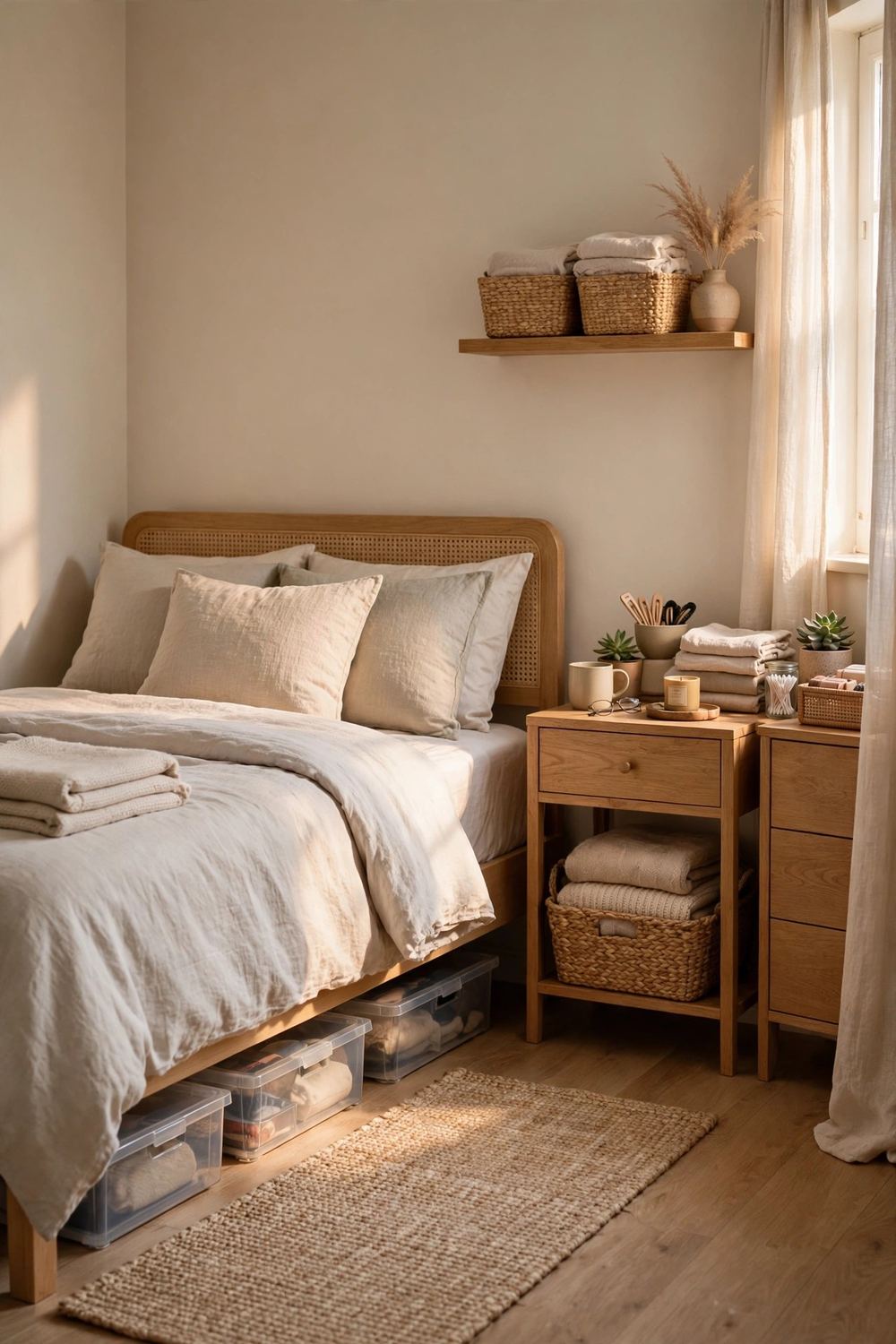
16. Claim the under-bed zone. Measure your clearance first (most frames give 6–7 inches; risers can add more if your lease and mattress height allow). Low, lidded boxes or rolling bins turn that footprint into storage for off-season clothes, extra bedding, and shoes. Choose boxes with lids — open bins under a bed become dust collectors.
17. A hanging shelf organizer for folded clothes. If your closet has more hanging space than you need but zero shelves, a fabric hanging organizer converts six feet of rod into instant cubbies for sweaters, jeans, and bags. It installs in seconds and leaves with you at move-out.
18. A nightstand that works like a dresser. In a small bedroom, a nightstand with at least one drawer plus a basket underneath beats a pretty open table. Drawer: chargers, book, medications. Basket: the overflow that would otherwise colonize the floor. If you are short on floor space entirely, a wall-mounted floating nightstand keeps the footprint at zero — pair it with a cozy reading nook setup and one corner does three jobs.
Bathroom & Laundry Organization Ideas (19–22)
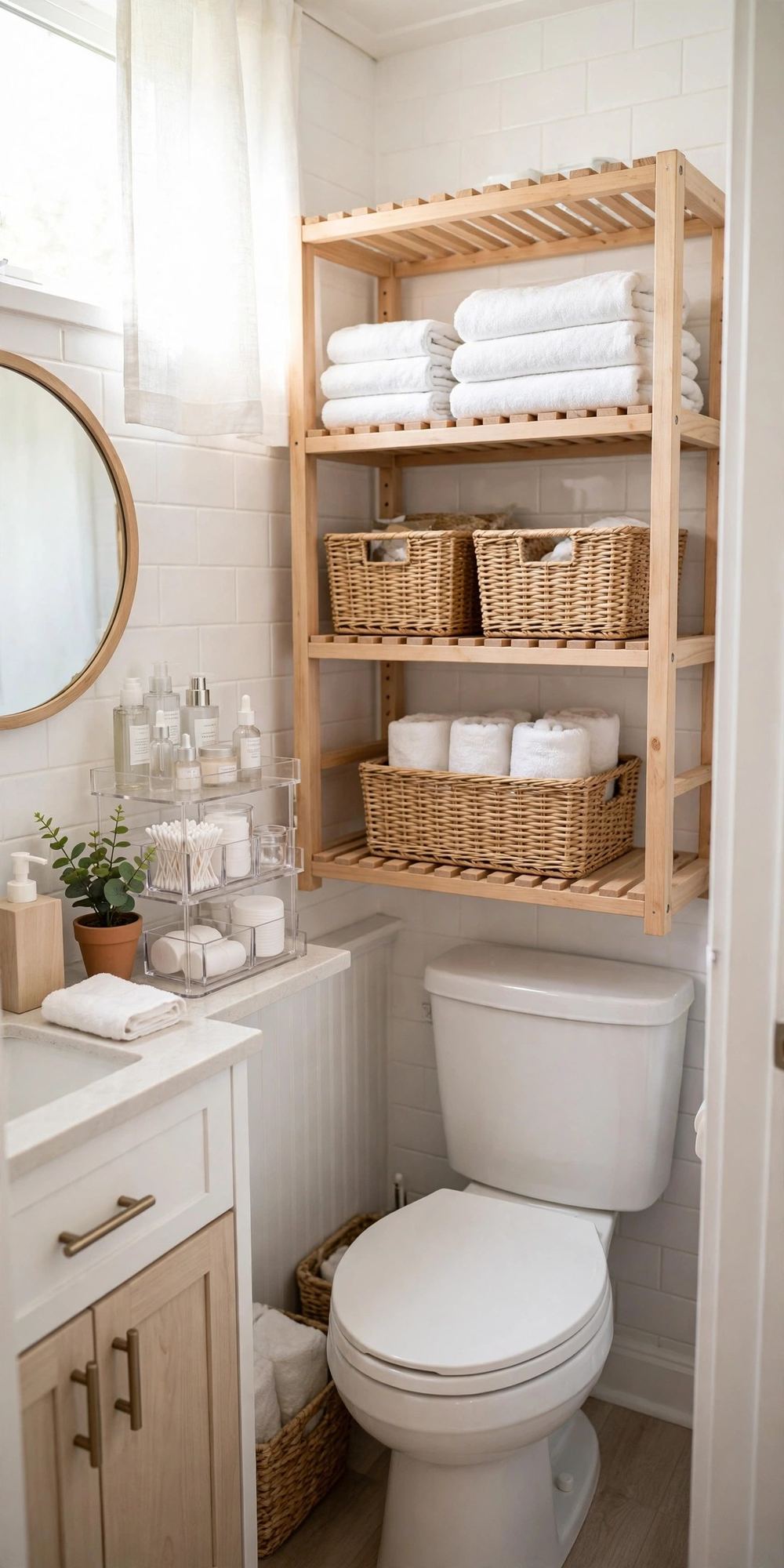
19. Over-the-toilet shelving. The two feet of wall above the toilet tank is the most underused storage in most rentals. A freestanding over-toilet unit adds two or three shelves for towels, baskets, and backups. Measure before ordering: shelf height above the tank (you need room to lift the tank lid for repairs) and total width between walls or fixtures.
20. A tiered tray on the counter. Counter clutter shrinks when it is corralled. A two-tier tray holds your daily skincare and toothbrush supplies in the footprint of a dinner plate. Everything else — the products you use weekly, not daily — goes in a bin under the sink or in a door organizer. For the full room-by-room approach, see these small bathroom ideas on a budget.
21. The back of the bathroom door. An over-door organizer with clear pockets is a renter classic for a reason: hair tools, first aid, cleaning supplies, and laundry products all visible, all off the counter. Clear pockets matter — if you can’t see it, you’ll rebuy it.
22. A laundry system that fits in a closet. Two slim sorting hampers (lights/darks) inside the closet or bathroom corner, plus a small caddy for detergent on top, replaces the giant hamper eating your floor. Slim hampers run about 15 inches wide — measure your gap before you fall in love with one online.
Corners & Vertical Space Ideas (23–25)
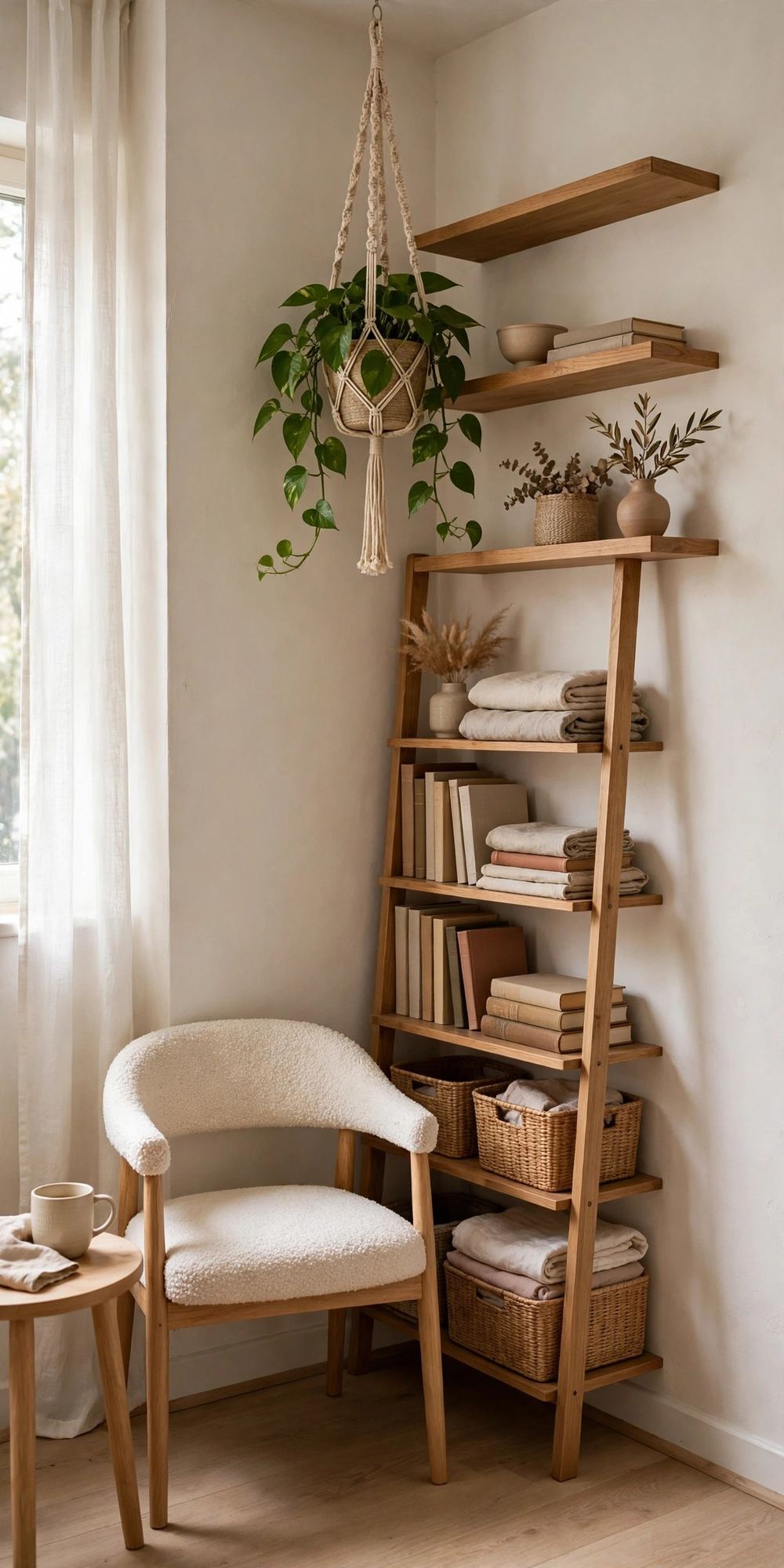
23. Turn one corner into a storage tower. A tall, narrow ladder shelf (14–16 inches wide) converts a dead corner into five shelves of baskets, linens, and books. Corners near the entry or beside the sofa are usually the best candidates.
24. Over-door storage in every room, not just the bathroom. Pantry doors take spice racks, closet doors take shoe organizers, bedroom doors take accessory storage. Doors are free real estate — most small apartments have five or more, and each back-of-door can hold a category.
25. A rolling cart as a mobile zone. A three-tier rolling cart becomes a coffee station, a craft zone, a work-from-home supply hub, or a guest-bathroom kit — and rolls into a closet when company comes. In a studio, one cart can be the entire “office storage” you need. If you host in a small space, you already know this logic from fitting a Christmas tree into a small living room: measure, go vertical, and give everything a zone.
The System That Keeps It Organized: The 10-Minute Reset
Organization is not an event; it’s a loop. This is the exact maintenance routine that keeps these 25 systems from collapsing by Thursday — and the part most readers save, print, and stick on the fridge.
Daily (10 minutes, evening):
- ☐ Landing strip cleared — keys, mail, bag in their homes
- ☐ One surface fully cleared (rotate: coffee table, kitchen counter, desk)
- ☐ Anything on the floor picked up and homed
- ☐ Basket check: entry basket and living-room baskets below the rim
Weekly (20 minutes, Sunday):
- ☐ Mail sorter emptied and paperwork filed or recycled
- ☐ Under-sink and fridge: toss expired items, wipe the shelf
- ☐ Closet floor clear; shoes back in the cabinet
- ☐ One small zone re-set properly (rotate through the rooms)
Monthly (30 minutes):
- ☐ One category edited: donate, recycle, or relocate the overflow
- ☐ Check adhesive hooks and tension rods — re-seat anything loosening
- ☐ Restock list made from the jars and bins (shop from the list only)
That monthly “one category” edit is the secret. Small apartments don’t get cluttered all at once; they get cluttered one category at a time, and this is how you reverse it the same way.
What It Costs: A Realistic Budget Breakdown
You do not need to buy all 25 systems at once. Start with the room that bothers you most:
- Starter kit (one room): $35–$75 — baskets, one riser, slim hangers, adhesive hooks
- Kitchen + entryway: $60–$120 — risers, jars, under-sink slider, shoe cabinet
- Full-apartment setup: $150–$250 — adding the ottoman, closet rods, over-toilet shelf, and cart
Dollar stores and thrift shops are genuinely great for baskets and jars; spend your real money on the two or three structural pieces (shoe cabinet, ottoman, over-toilet shelf) that you will touch every day.
5 Small Apartment Organization Mistakes to Avoid
- Buying bins before decluttering. Organizing things you don’t need just gives clutter a nicer container. Edit first, measure second, buy third.
- All open storage. It photographs beautifully and lives terribly in under 600 square feet. Aim for at least 70% closed storage.
- Ignoring door backs and vertical space. If you are out of floor and shelf space but your doors and high walls are empty, you are not out of space.
- One-size-fits-all bins. A bin that’s too deep for a 12-inch cabinet or too tall for 6-inch under-bed clearance is wasted money. Your five phone measurements prevent this.
- No landing strip. Without a designated drop zone, every surface becomes the drop zone. Idea #3 is small but it changes everything.
Frequently Asked Questions
How do I organize a small apartment on a budget?
Start with editing what you own (free), then buy in this order: baskets and bins ($1–$5 each at dollar or thrift stores), shelf risers, slim hangers, and one or two structural pieces. A genuinely effective one-room setup costs $35–$75. The systems matter more than the products — a $3 basket with an assigned category beats a $30 bin without one.
Where should I start organizing a small apartment?
Start at the entryway. It is the smallest zone, the fastest win (under an hour), and it controls what flows into every other room. Then do the kitchen cabinets, then the closet. Leave sentimental categories — photos, keepsakes, paperwork archives — for last, when your decision muscles are warmed up.
How can renters organize without drilling holes?
Use adhesive hooks and strips within their weight ratings, tension rods, over-door organizers, and freestanding furniture (shoe cabinets, over-toilet shelves, ladder shelves). Everything in this guide is either freestanding, adhesive, tension-based, or door-hung — nothing requires a drill, and all of it leaves with you when you move.
How do I maximize storage in a studio apartment?
Think in zones and heights. Give sleep, work, relax, and eat each a defined footprint; store vertically above each zone; use furniture that contains storage (ottoman, bed frame with clearance, nightstand with drawers); and keep at least 70% of storage closed so the single room never looks like a warehouse. The rolling cart (idea #25) is the studio MVP — it creates a movable zone anywhere.
How often should I reset my organization systems?
Ten minutes daily, twenty minutes weekly, thirty minutes monthly — the reset routine above. Systems don’t fail because they were badly designed; they fail because nothing maintained them. If a zone keeps collapsing faster than the routine can save it, that zone’s system is wrong for your habits — change the system, not yourself.
Your Small Apartment Is Not Too Small — It Just Needs Systems
Twenty-five systems sounds like a lot, but you don’t need all of them, and you definitely don’t need them this week. Pick the room that stresses you out, install two or three systems from that section, and live with them for a week. Small apartment organization ideas only work when they match how you actually move through your home — and once the first room stays tidy on its own, the rest of the apartment gets much easier to believe in.
Save this post for your next organizing weekend, and if you are planning seasonally, Pinterest’s trend data shows organization searches surge every January and September — the two best times of year to do exactly this reset.
Related reading: Dorm Room Decor Ideas on a Budget
You May Also Like
Small Kitchen Organization: ...
03 November 2026
No Closet? 15 Clothes-Storag ...
15 August 2026
Popular Post


Leave a Comment