

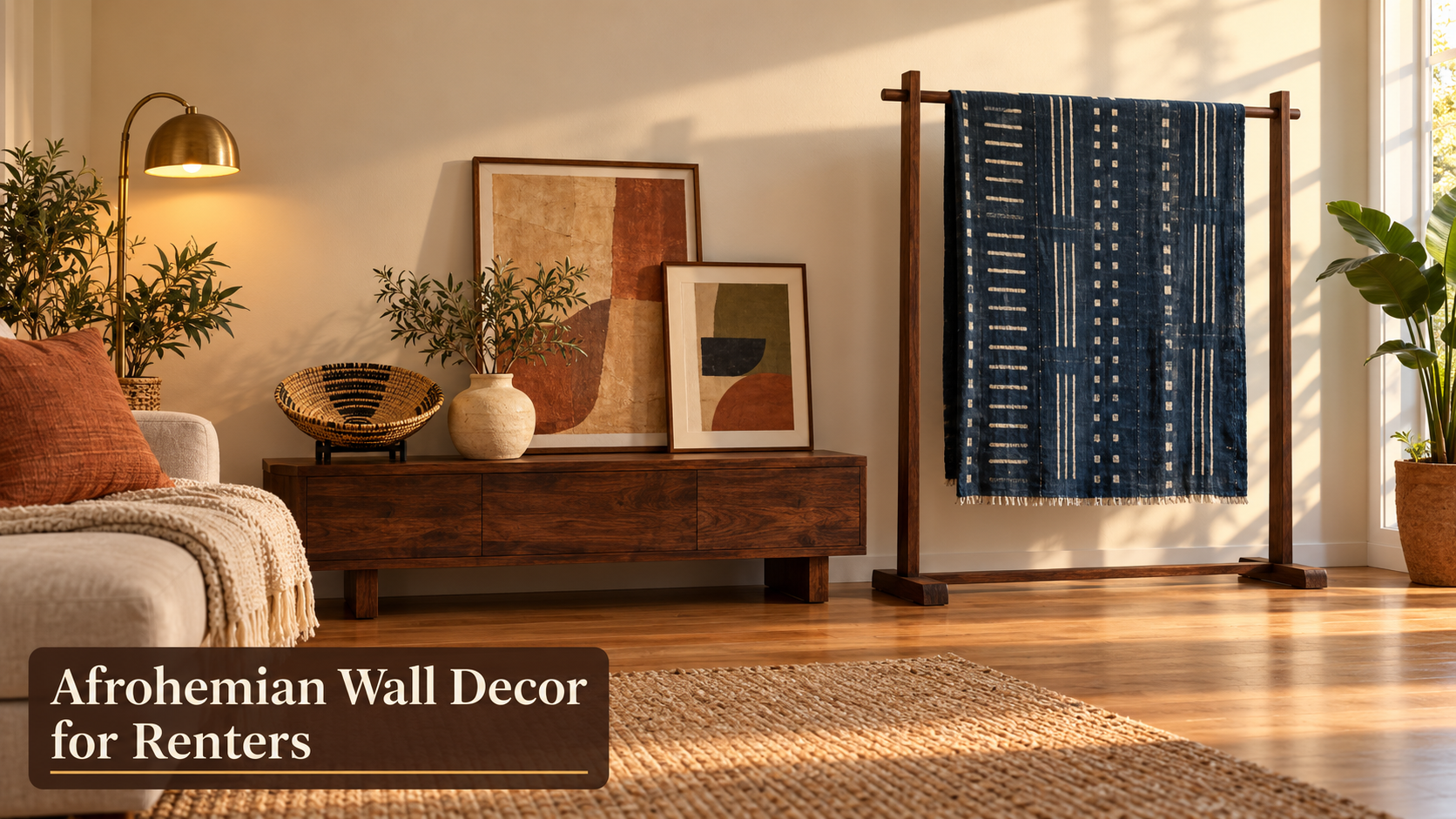
Afrohemian wall decor for renters should bring color, craft and personal meaning into a room without turning the security deposit into an installation fee. The challenge is choosing a display method that suits the object, wall and lease.
I am cautious whenever a product description says “damage-free.” A strip may release perfectly from one fully cured wall and lift paint from another. A textile may be light but still need enough support to hang straight.
This guide compares 12 no-drill Afrohemian wall displays by typical cost, displayed weight and wall-damage risk. The highest-ranked ideas keep their weight off the wall entirely. The lower-ranked options can still work, but they require more surface testing, stricter weight control and careful removal.
If you are planning the whole home rather than one wall, begin with my broader guide to Afrohemian decor on a budget. For a sleep-space version with bedding, lighting and storage priorities, use my Afrohemian bedroom for renters guide. This article focuses only on the vertical layer: textiles, baskets and art that can be displayed without drilling.
Quick answer: what is the safest no-drill Afrohemian wall display?
The safest option is usually a freestanding display that creates a wall-art effect without loading the wall. Lean framed art on a stable dresser, hang a textile from a garment rail, or use a folding screen. These methods are movable and far less dependent on paint condition.
For adhesive installations, use only lightweight objects on approved surfaces. Weigh the complete object—including frame, glass and backing—test discreetly, follow preparation instructions and remove the adhesive exactly as directed.
My practical rule is simple: if an object is valuable, irreplaceable, heavy or positioned above a bed or sofa, I would not make a generic removable strip its only safety system.
The 12 no-drill displays at a glance
| Rank | Display method | Typical cost | Typical displayed weight* | Wall-damage risk |
|---|---|---|---|---|
| 1 | Lean framed art on furniture | $0–$60 | 2–12 lb | Very low |
| 2 | Hang a textile from a freestanding rail | $25–$100 | 1–6 lb | Very low |
| 3 | Turn a folding screen into a textile gallery | $60–$180 | 2–10 lb total | Very low |
| 4 | Display a shallow basket on a stand or console | $15–$75 | 1–5 lb | Very low |
| 5 | Use an over-the-door textile rail | $18–$55 | 1–5 lb | Low |
| 6 | Build a floor-to-ceiling tension-pole gallery | $45–$150 | Product-dependent | Low–medium |
| 7 | Use picture-hanging strips for lightweight frames | $12–$60 | Usually 1–8 lb | Medium |
| 8 | Suspend one textile from removable hooks and a dowel | $15–$65 | 0.5–3 lb | Medium |
| 9 | Hang a restrained basket cluster on removable hooks | $25–$100 | 0.5–2 lb each | Medium |
| 10 | Mount fabric-wrapped foam-board panels | $20–$70 | 0.5–2 lb each | Medium |
| 11 | Create a washi-tape paper-art grid | $5–$30 | Under 0.25 lb each | Medium |
| 12 | Apply removable fabric wall panels | $30–$120 | Under 2 lb | Medium–high |
*Displayed weight describes the approximate object weight, not a universal support capacity. Always follow the specific product’s limits and installation instructions.
Before installing Afrohemian wall decor for renters
Name the textile or art tradition accurately
“African pattern” is too broad to describe a continent’s many distinct art and textile traditions. Adire, for example, refers to indigo resist-dyed cloth associated with Yoruba women artists in Nigeria. The Smithsonian National Museum of African Art describes these works as indigo-dyed and patterned textiles made by skilled Yoruba dyers.
Bògòlanfini comes from Mali and is central to Bamana textile culture. The Metropolitan Museum of Art notes that the cloth is produced through a complex process involving woven cotton, plant extracts and mud, and that its designs may carry symbolic meaning.
I would rather use one named, responsibly sourced textile with room around it than cover a wall with anonymous “tribal” prints. If a mass-produced piece only borrows a geometric look, describe it as geometric instead of claiming an undocumented origin. Never cut an heirloom textile merely to fit a frame.
Audit the wall, object and traffic path
Photograph the wall in daylight. Look for peeling paint, residue, wallpaper seams, texture, moisture and fresh patching. Weigh the complete object and measure its depth; a light basket may still project into a narrow path.
Avoid adhesive-hung pieces above beds, cribs, frequently used chairs or electronics. Keep textiles clear of heat and outlets. If the lease prohibits adhesives as well as holes, use the first four freestanding options.
For heavier objects, compare the limits and tradeoffs in my guide to hanging heavy decor without drilling before choosing a support system.
Understand what “removable” really means
Paint type, curing time, surface preparation, humidity and removal technique affect the result. For example, 3M’s picture-hanging strip instructions specify surface preparation and warn against attaching strips to paper or fabric surfaces on a frame.
Use the manufacturer’s current instructions for the exact product in your hand. Do not combine random hooks and strips, double the number of strips to invent a higher capacity, or assume that a product rated for a smooth painted wall will behave the same way on textured plaster.
1. Lean framed art on a dresser or console
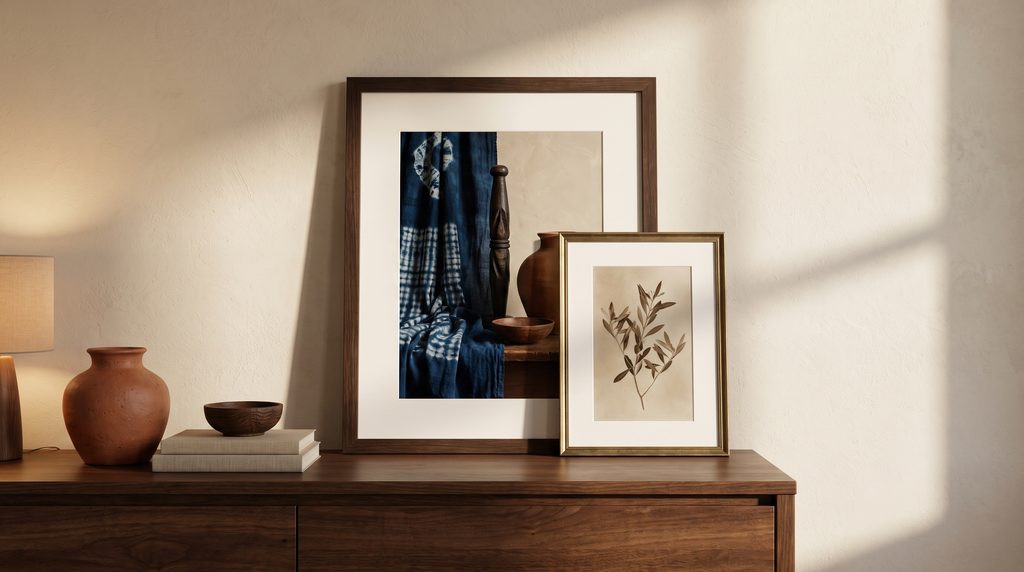
Cost: $0–$60 | Displayed weight: 2–12 lb | Damage risk: Very low
Leaning art is my first choice because the wall carries no weight. Place one large framed print or two overlapping frames on stable furniture. Use anti-slip pads and enough surface depth to prevent tipping.
For an Afrohemian arrangement, pair a documented textile photograph, artist print or botanical work with warm walnut, dark espresso or aged brass. One tall frame gives the wall height; a smaller piece can overlap its lower corner. Stop before the surface becomes a souvenir shelf.
The frame can change rooms without new adhesive, and the composition is easy to adjust after taking a doorway photo.
2. Hang a textile from a freestanding garment rail
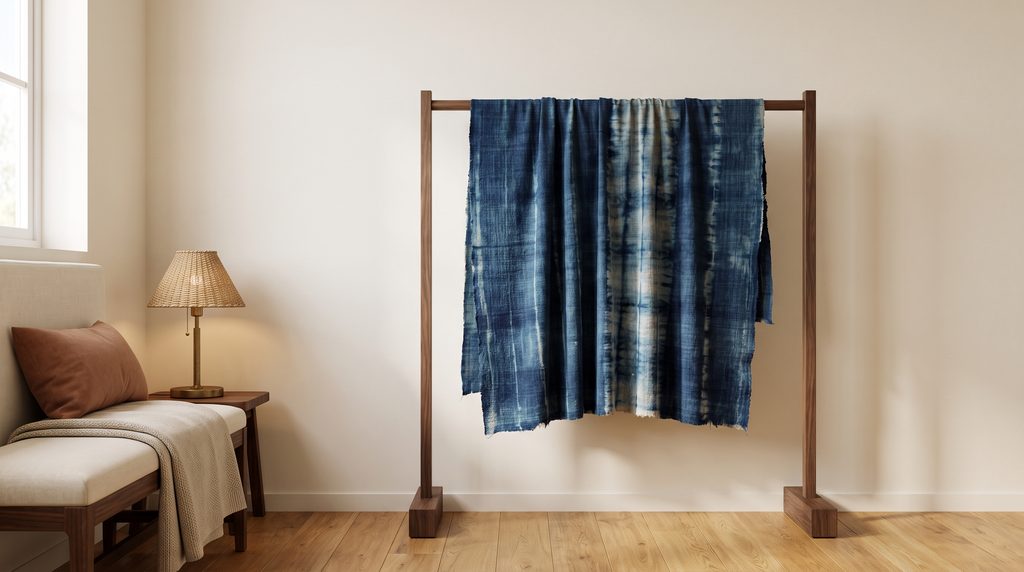
Cost: $25–$100 | Displayed weight: 1–6 lb | Damage risk: Very low
A slim garment rail or purpose-built textile stand creates a large vertical focal point without touching the wall. Drape the textile over the top bar, use fabric-safe clips, or slide a stitched sleeve over a removable rod.
Choose a rail with broad feet and enough width to prevent bunching. One indigo adire panel against a warm neutral wall can carry more impact than six small prints.
It is kinder to handwoven pieces because no tape touches the fibers and the weight is distributed across a bar.
3. Turn a folding screen into a textile gallery
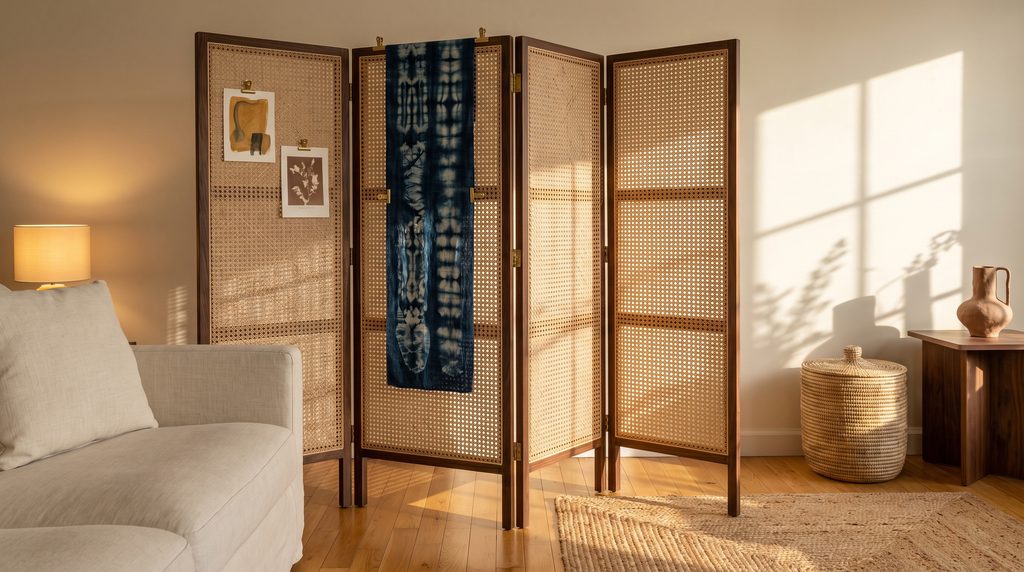
Cost: $60–$180 | Displayed weight: 2–10 lb total | Damage risk: Very low
A cane, wood or fabric folding screen can function as movable architecture and a freestanding gallery. Drape one textile over a panel, attach lightweight art cards with removable clips, or use the screen itself as a quiet woven backdrop.
Open the panels in a stable zigzag and keep the screen out of the main walkway. Do not overload one side. If children or pets can reach it, follow the product’s anti-tip guidance or choose a lower, wider design.
It can soften a blank wall, disguise an open rack or define a studio corner. Mark the feet with painter’s tape before buying because the tradeoff is floor space.
4. Display a shallow basket on a stand or console
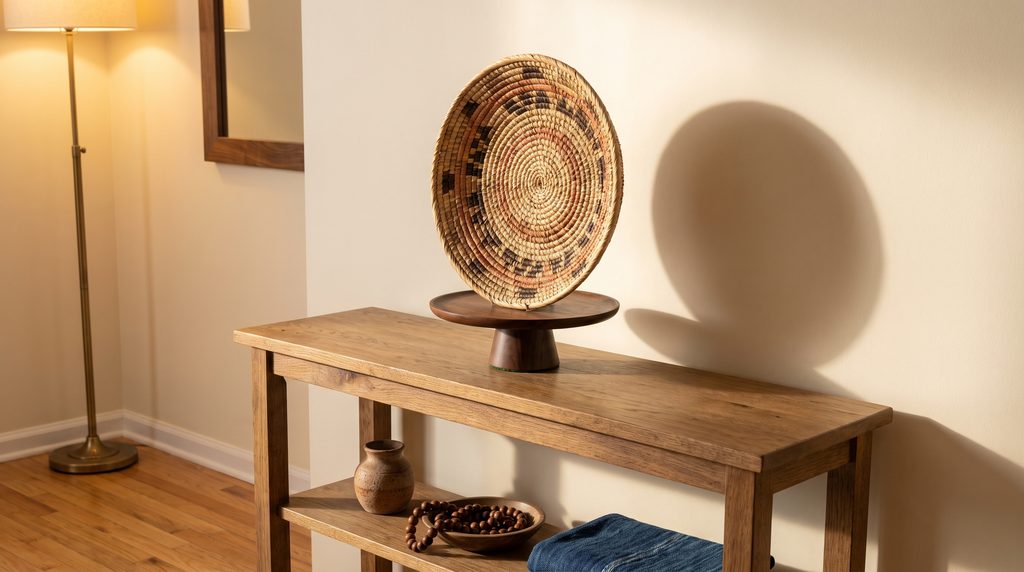
Cost: $15–$75 | Displayed weight: 1–5 lb | Damage risk: Very low
A shallow handwoven basket can read as wall art when it is raised on a sturdy plate stand, easel or narrow console. The key is scale: use one substantial basket or a pair with clearly different sizes rather than a crowded “basket wall.”
Check that the stand supports the basket’s widest point and cannot slide. A museum putty or anti-slip pad may stabilize the stand on furniture, but keep adhesive away from fragile fibers and finishes.
When one basket is the focal point, its maker, weaving region and material matter more than whether five inexpensive baskets match. Keep its sourcing information in your records.
5. Use an over-the-door textile rail
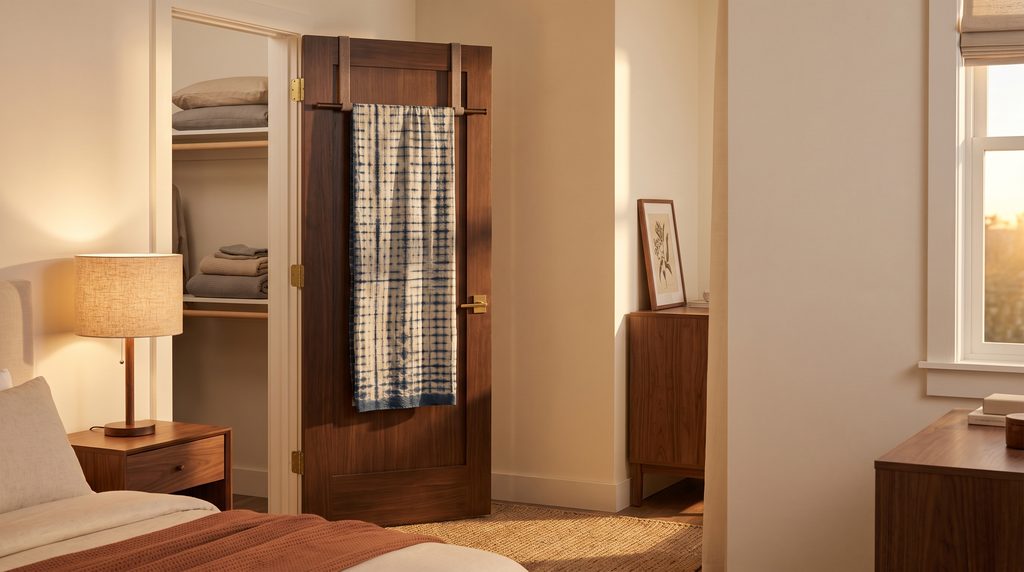
Cost: $18–$55 | Displayed weight: 1–5 lb | Damage risk: Low
An over-the-door rail can hold a lightweight textile on the room side of a closet or rarely used door. Choose a padded bracket that fits the door thickness, clears the frame and does not interfere with hinges or latches.
Test the entire swing before styling. The textile should not drag, catch under the door or cover required ventilation. Keep it away from exterior doors and emergency exits.
If you are building the room around the same palette, my Afrohemian bedroom for renters guide explains how to coordinate one statement textile with bedding, light and storage.
6. Build a floor-to-ceiling tension-pole gallery
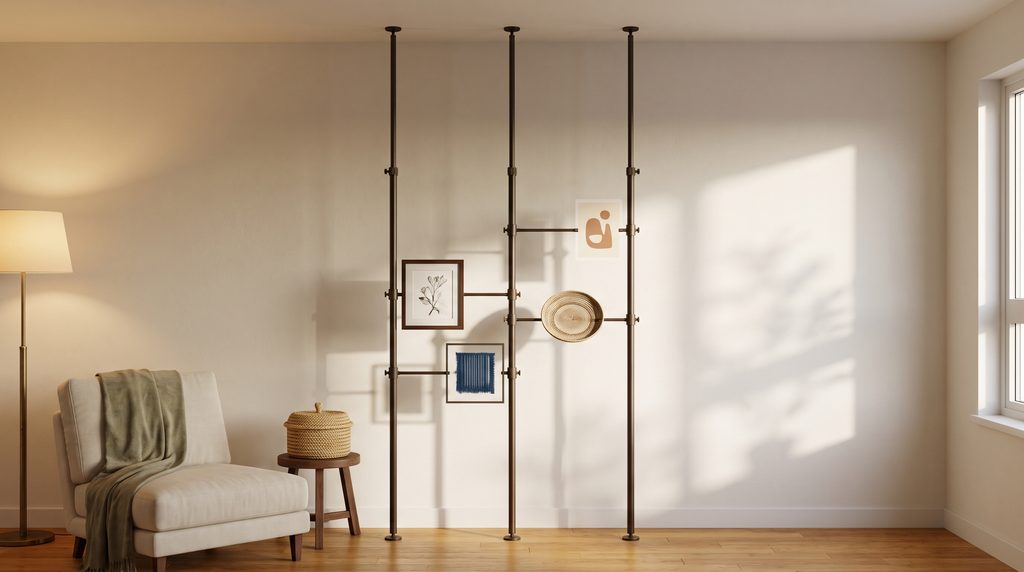
Cost: $45–$150 | Displayed weight: Product-dependent | Damage risk: Low–medium
A tension-pole display transfers pressure between the floor and ceiling rather than requiring drilled wall anchors. Small platforms or clips can hold light framed art, art cards or one compact woven object.
Measure the ceiling height and read the product’s surface and load requirements. Use both compression pads, keep the pole perfectly vertical and distribute weight low and evenly. A tension system can still leave pressure marks, especially on weak paint, soft ceilings or uneven floors.
This suits a narrow corner where furniture would feel bulky. Leave at least one-third empty so the objects remain legible.
7. Use picture-hanging strips for lightweight framed art
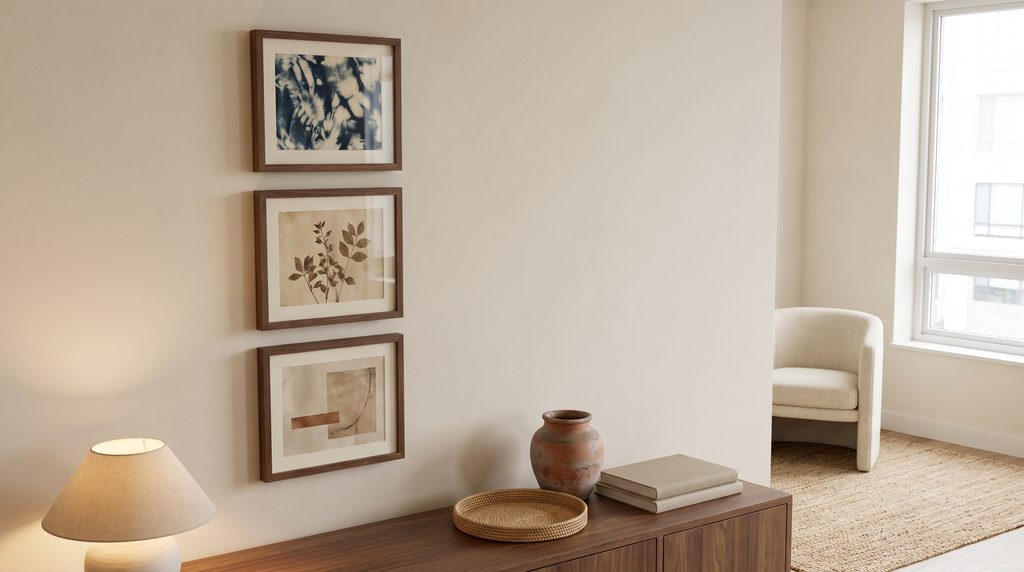
Cost: $12–$60 plus art | Displayed weight: Usually 1–8 lb | Damage risk: Medium
Picture-hanging strips can work on compatible smooth surfaces when the frame, number of strip pairs and installation method match the manufacturer’s directions. Weigh the finished frame. Glass, backing and hardware count.
Prepare the wall exactly as instructed, observe the waiting time and press each strip where the frame is rigid. Do not attach strips to fabric, paper or weak backing. Remove them in the specified direction.
Use this method for replaceable, lightweight art—not an irreplaceable textile, ceramic piece or heavy carved panel. If the paint condition is unknown, choose a freestanding option instead.
8. Suspend one textile from removable hooks and a dowel
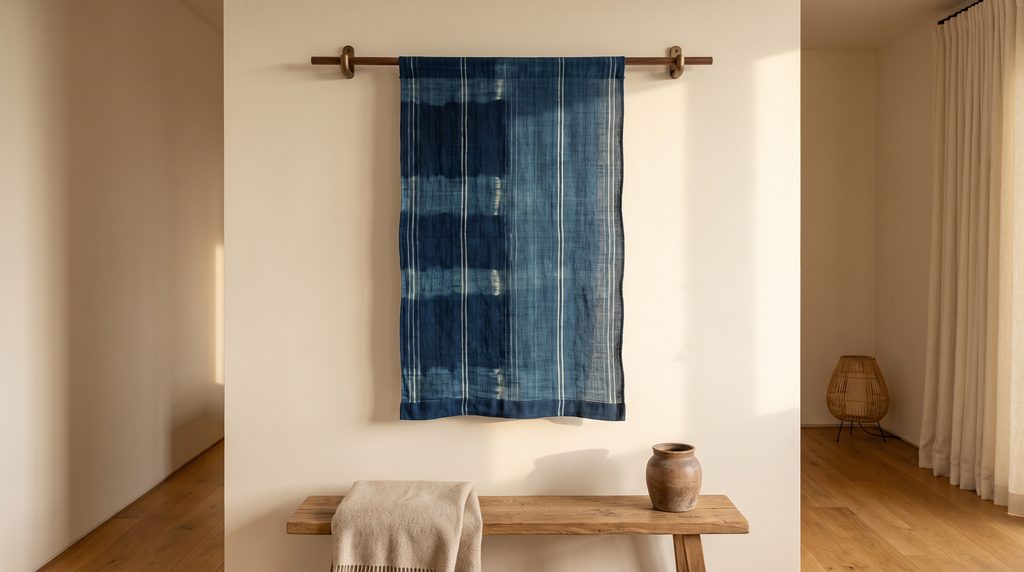
Cost: $15–$65 | Displayed weight: 0.5–3 lb | Damage risk: Medium
A lightweight dowel spreads a textile’s width and helps it hang cleanly. Add a sewn sleeve or use fabric-safe clips, then support the dowel with two removable hooks rated for the combined weight.
Keep the textile light and the dowel slim. Measure the textile, rod, clips and cord together. A heavy wood bar can outweigh the fabric it is supposed to display.
The hooks must be level and compatible with the wall, and the installation should not sit above the bed. For a valuable cloth, a freestanding rail is the conservative choice.
9. Hang a restrained basket cluster on removable hooks
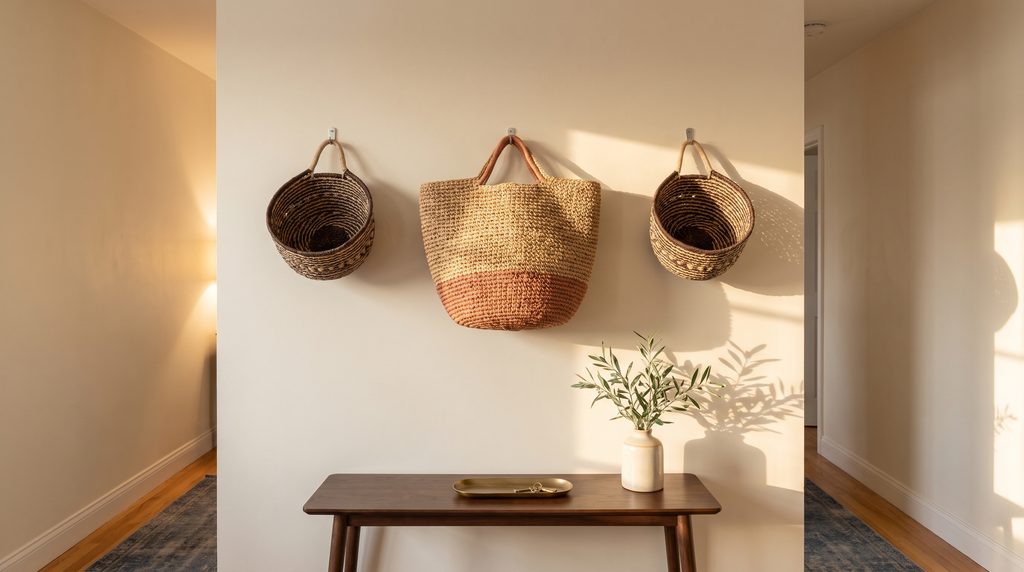
Cost: $25–$100 | Displayed weight: 0.5–2 lb each | Damage risk: Medium
If you want a basket grouping, use three lightweight, shallow baskets rather than nine mixed pieces. Arrange one larger anchor with two smaller supporting shapes. Repeat one material or color so the group reads as a composition.
Each basket needs its own correctly rated support. Weigh every piece, inspect the hanging loop and keep the cluster away from head height in a narrow passage. Do not hang functional storage baskets containing objects; this is a decorative display only.
Do not flatten baskets from different regions into one anonymous “African wall.” Retain sourcing information and name the technique or maker when known.
10. Mount fabric-wrapped foam-board panels
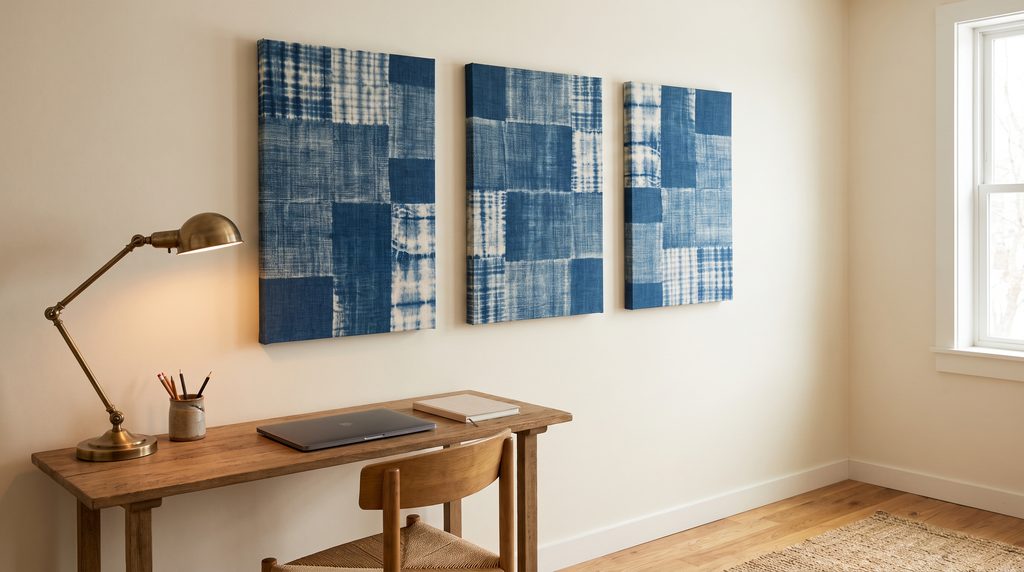
Cost: $20–$70 | Displayed weight: 0.5–2 lb each | Damage risk: Medium
Foam board can turn a small length of printed fabric into lightweight art without cutting a valuable full textile. Use new yardage or a replaceable reproduction, wrap it around archival tissue or a protective barrier, and secure it on the back without permanent glue on the visible fibers.
Create one large panel or a triptych with consistent spacing. Mount the panels only with an adhesive system approved for both the board backing and the wall.
This creates strong visual scale for little weight. The weak point is the bond: foam board can flex, and some adhesives do not grip porous backing reliably.
11. Create a washi-tape paper-art grid
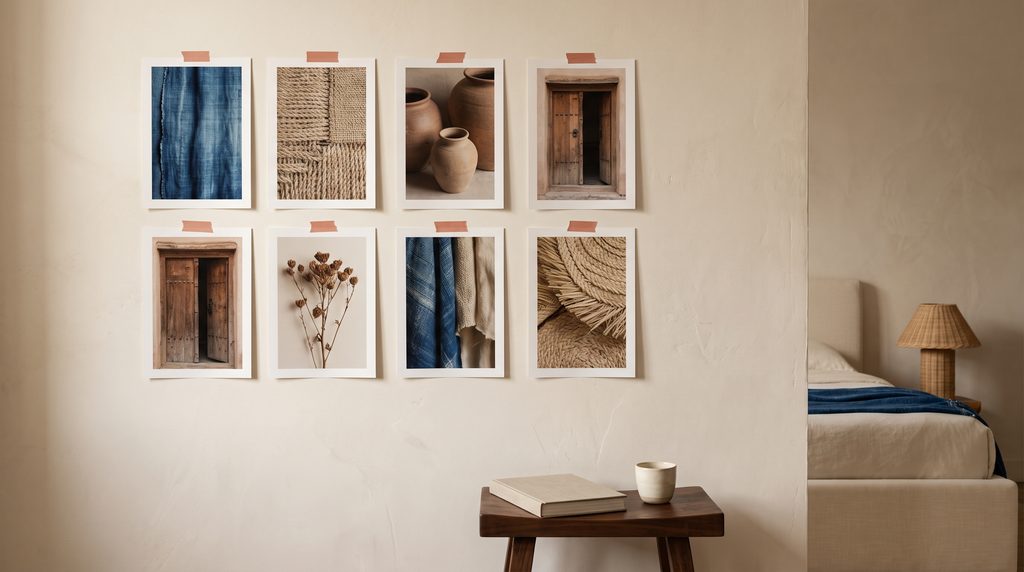
Cost: $5–$30 | Displayed weight: Under 0.25 lb each | Damage risk: Medium
Use six to nine unframed paper prints in a disciplined grid, attached with small pieces of quality washi tape. Choose photographs, botanical studies, exhibition postcards or licensed prints from artists whose work fits the room.
Keep every print the same size and use one tape color. The restraint is important: a casual paper wall can quickly read like temporary dorm décor rather than an intentional art display.
Washi tape can transfer pigment, leave residue or lift weak paint. Test it discreetly and never attach it directly to original artwork.
12. Apply removable fabric wall panels
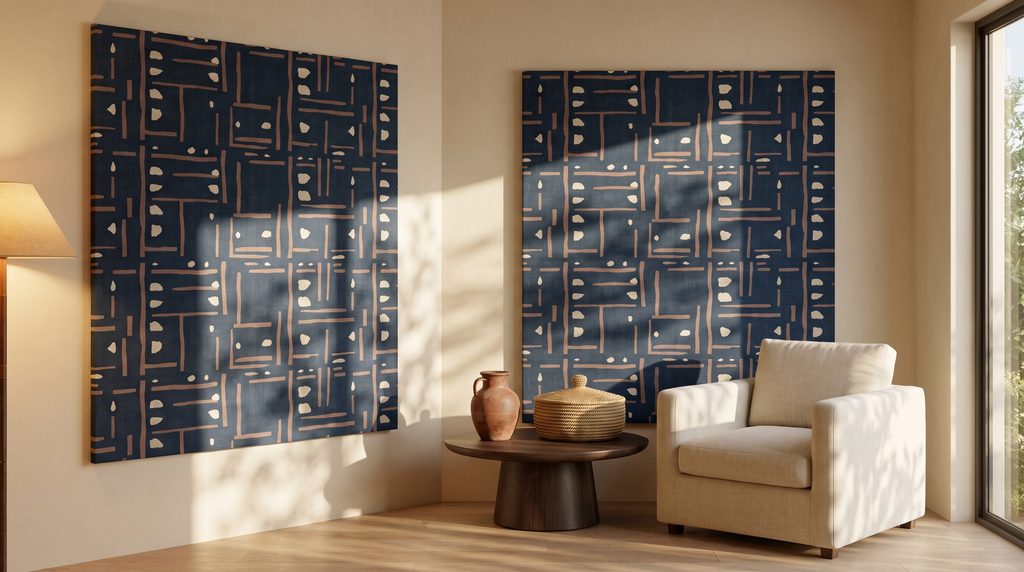
Cost: $30–$120 | Displayed weight: Under 2 lb | Damage risk: Medium–high
Removable fabric decals or peel-and-stick textile panels can create a large block of color with almost no physical weight. Use one rectangular panel or an arch-shaped composition and leave the original wall visible around it.
This ranks last because low weight does not equal low surface risk. Paint condition, texture, wallpaper, humidity and installation time can affect removal. Test a sample for the recommended period and obtain permission when required.
Avoid copying a culturally specific motif simply because it looks “global.” A solid indigo-look panel, documented artist collaboration or accurately described reproduction is a better choice than an invented imitation.
The no-clutter formula for Afrohemian wall decor for renters
Before adding another object, check four things:
- Anchor: Is there one textile, basket or artwork large enough to lead the wall?
- Breathing room: Is at least one-third of the surrounding wall quiet?
- Repetition: Do two or three colors or materials connect the display to the room?
- Story: Can you name the artist, maker, technique, place or personal reason behind the focal piece?
If those four answers are clear, the wall probably does not need more. Afrohemian interiors gain depth from meaningful relationships between objects—not from filling every gap.
Three renter-safe wall plans by budget
The $25 plan: use what you own
Lean an existing frame on a dresser and add one small textile or basket on a stand. Spend on anti-slip pads, a stable easel or better printing rather than filler.
The $75 plan: create one textile focal point
Buy a simple freestanding rail or secondhand garment rack and use one responsibly sourced textile as the anchor. Add warm light if the budget allows.
The $150 plan: build a movable wall system
Choose a stable folding screen or tension-pole display, then add one textile and one or two light art pieces. Keep it portable for a future room or apartment.
Frequently asked questions
Can Afrohemian wall decor for renters be completely damage-free?
No method can guarantee it on every wall. Freestanding systems carry no wall load but still need stable placement. Adhesive results depend on the finish, paint condition, preparation, product and removal.
What should I hang first: a textile, basket or framed art?
Start with the largest meaningful piece. A textile adds softness, a shallow basket adds sculpture and framed art supplies a visual story. Use one anchor and no more than two supporting pieces.
Can I hang a textile above my bed without drilling?
I would avoid relying on generic adhesive hooks above a bed, especially for a dowel, heavy textile or valuable piece. Use a textile headboard attached safely to the bed, a freestanding rail behind the headboard or a properly stabilized screen instead.
How many baskets should be in a renter-friendly basket wall?
Three is usually enough in a small apartment: one large basket and two smaller pieces. Weigh and support each basket separately, maintain clear spacing and avoid mixed sourcing that treats distinct regional traditions as interchangeable.
How do I protect an authentic textile while displaying it?
Keep tape and glue away from the fibers. Support the textile across its width, avoid direct sun, moisture and heat, and follow conservation or maker guidance for valuable pieces. Rotate fragile textiles rather than leaving them under constant light.
What keywords should I use when searching for responsible pieces?
Search by a named technique, region, artist or cooperative. Try “Yoruba adire textile,” “Malian bògòlanfini,” “Ethiopian woven wall art,” or the maker’s name. Distinguish authentic work from pattern-inspired reproductions.
Final thoughts
The best Afrohemian wall decor for renters does not depend on a wall surviving a risky experiment. It begins with an object worth noticing and a display method appropriate to its weight, value and location.
I would start with the wall-load-free options: leaned art, a freestanding textile rail, a folding screen or a basket on a stand. They are easier to move, easier to edit and kinder to uncertain rental surfaces. Use adhesive systems only after checking the wall and the manufacturer’s instructions.
Most importantly, let the object retain its identity. One well-sourced textile or artwork with space around it will always feel more intentional than a wall filled with anonymous approximations. That approach is safer for the rental, better for a small room and far more faithful to the collected, story-rich character that makes Afrohemian design compelling.
You May Also Like

12 Comfy Reading Chairs for ...
25 September 2026

Trinket Shelf Decor on a Bud ...
24 September 2026
New Year, No Spend: A 20-Ste ...
12 September 2026
Popular Post


Leave a Comment