

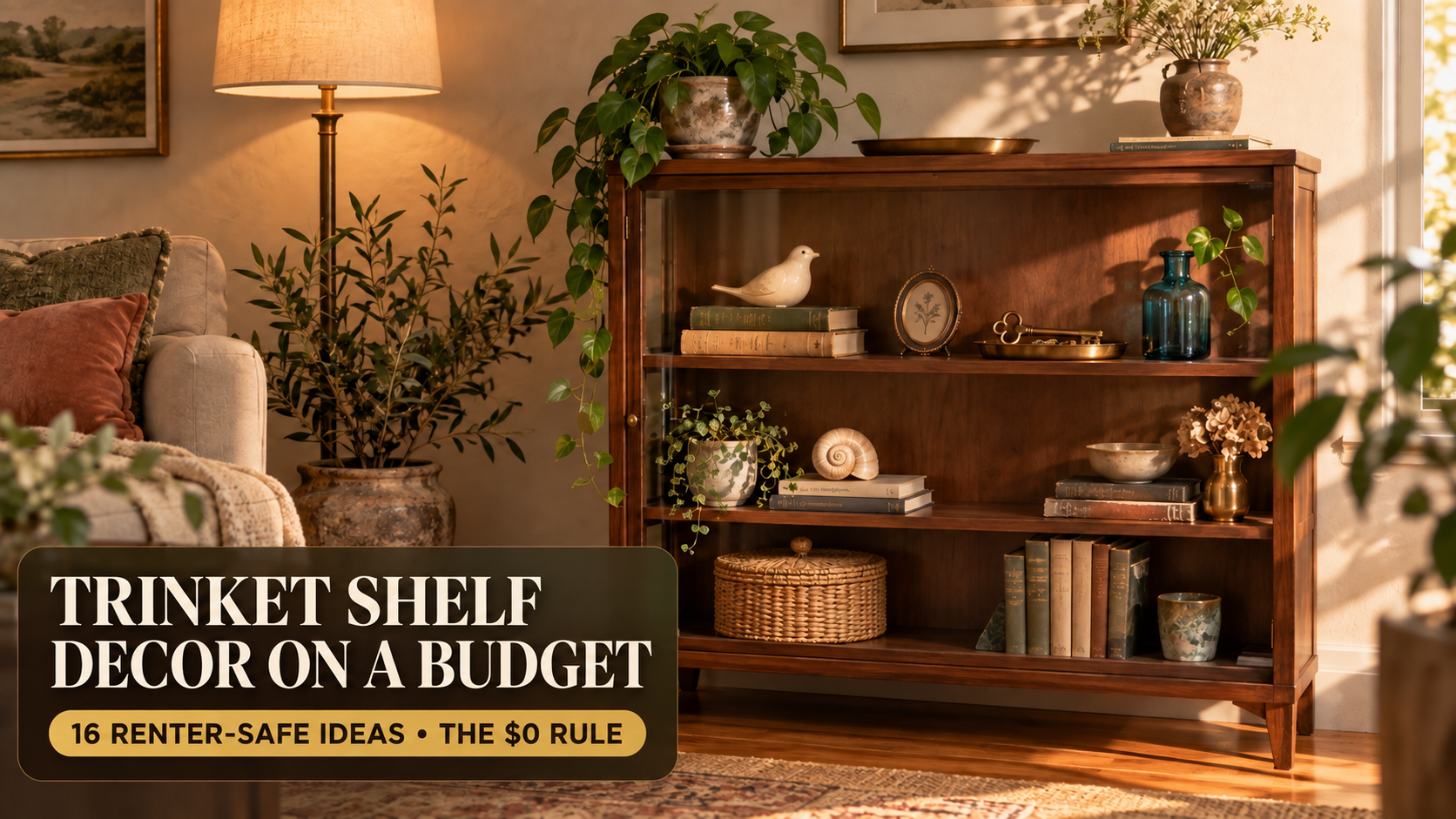
Trinket shelf decor on a budget sounds easy until every tiny object you love is sitting shoulder to shoulder on one tiny shelf. The ceramic bird from a thrift store, the shell from a trip, your grandmother’s brooch, three miniature frames and the brass box you absolutely did not need—but bought anyway—can look charming individually and strangely chaotic together.
I do not think the answer is to become a minimalist or hide every sentimental thing in a storage bin. Small objects are often what make a rental feel personal. The problem is usually not the collection. It is the lack of a visual hierarchy around it.
That matters even more in a small apartment, where a crowded shelf can make the whole room feel busy. The good news is that an intentional display does not require custom cabinetry, permanent floating shelves or a large budget. It needs one clear anchor, a repeatable arrangement and enough empty space for the eye to understand what it is seeing.
Below are 16 renter-safe curio displays that can sit on furniture, stand on the floor, use tension rather than screws or adapt pieces you already own. Before we get to them, I want to give you the free rule that keeps all 16 from turning into clutter.
Quick answer: Leave roughly one-third of every trinket display visually empty. Use the remaining two-thirds for one anchor object and one small supporting group. When the empty third disappears, rotate something out instead of squeezing something else in.
Why Trinket Shelf Decor on a Budget Is Suddenly Everywhere
This is not just another name for maximalism. Pinterest’s 2026 Hobbies Trend Report describes a shift toward “curated micro-collections” that are personal, easy to rotate and meant to be seen. Searches for trinket shelf ideas rose 852%, while searches for vintage trinket shelf increased 193%, according to Pinterest’s own report.
That surge makes sense. After years of nearly empty beige rooms, people want homes that contain evidence of a life: travel finds, old photographs, tiny art, figurines, shells, matchbooks, inherited pieces and objects connected to a hobby. A trinket shelf offers that personality without requiring a new sofa or an entire style overhaul.
It also fits a real renter budget. If you already enjoy my guide to thrifted decor trends for small apartments, you probably own several potential display pieces already. A worn wooden drawer, a small cake stand, a stack of books or a divided tray can become a curio display for very little—or nothing.
The challenge is restraint. Curated clutter is still curated.
The $0 Rule for Trinket Shelf Decor on a Budget
My rule is simple: leave one-third empty.
Imagine dividing a shelf, tray or cubby into three loose sections. One section holds your anchor object. A second contains a smaller supporting group. The final section stays visually quiet. It does not have to be literally bare, but it should read as breathing room rather than another cluster.
For example, place a six-inch framed photo on the left, group a brass dish with two small ceramics on the right, and leave a calm gap between them. You have five objects on the shelf, but the arrangement reads as two ideas—not five unrelated things asking for attention.
The one-third-empty rule works because it creates contrast. The eye notices the objects precisely because there is space around them. It also gives a collection room to grow without forcing you to buy a bigger organizer every month.
I use three additional guardrails:
- One anchor: Choose the tallest, darkest, brightest or most meaningful piece.
- One repeated detail: Repeat a material, color or shape at least twice.
- One rotation box: Store the pieces that are not currently displayed and change the shelf seasonally.
That last step is important. Rotation is not rejection. An object can matter without being on permanent display.
16 Renter-Safe Trinket Shelf Decor Ideas on a Budget
Costs below are typical budget ranges, not fixed prices. Start with what you own, then check thrift shops, estate sales, local marketplaces and Buy Nothing groups before purchasing something new.
| Display idea | Typical cost | Wall contact | Clutter risk | Best use |
|---|---|---|---|---|
| Existing bookcase shelf | $0 | None | Low | First collection |
| Tabletop cubby | $8–$30 | None | Low | Miniatures |
| Leaning printer’s tray | $10–$35 | None | Medium | Tiny objects |
| Furniture-backed ledge | $5–$25 | None | Low | Frames and art |
| Shadow box on an easel | $5–$20 | None | Low | Fragile keepsakes |
| Tiered riser | $0–$18 | None | Medium | Ceramics and figures |
| Shallow tray | $0–$15 | None | Low | Flexible vignette |
| Glass cloche | $8–$30 | None | Low | One special group |
| Desk-backed grid | $10–$30 | None | Medium | Cards and photos |
| Over-door rail | $10–$25 | Door only | Medium | Lightweight pieces |
| Tension-pole display | $25–$70 | Compression pads | Low | Narrow corners |
| Decorative ladder | $15–$50 | Floor-supported | Medium | Textiles and photos |
| Rolling cart | $15–$45 | None | Medium | Hobby collections |
| Low curio cabinet | $30–$100 used | None | Low | Dust-sensitive objects |
| Window ledge display | $0 | None | Medium | Stone and glass |
| Seasonal rotation shelf | $0 | None | Very low | Growing collections |
1. Dedicate One Existing Bookcase Shelf
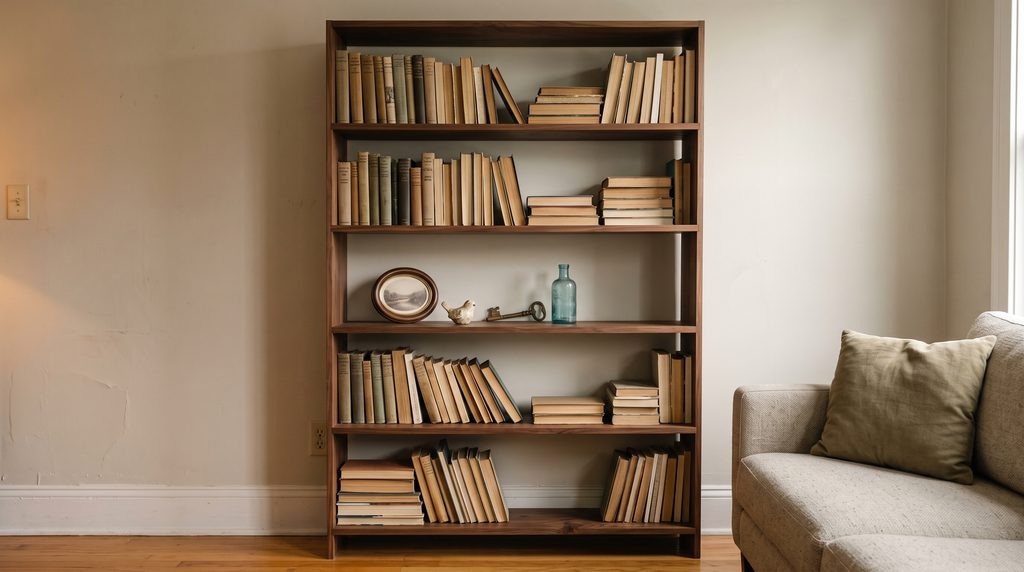
The cheapest trinket shelf is the shelf you already own. Clear one opening instead of scattering small objects across the entire bookcase, then treat it as a framed display zone.
Place one tall object at the back, add a low group of two or three pieces and preserve the final third as open space. If your shelves are already full, use the zoning ideas in my book drenching guide so the curio display looks intentional rather than like overflow.
2. Thrift a Small Tabletop Cubby
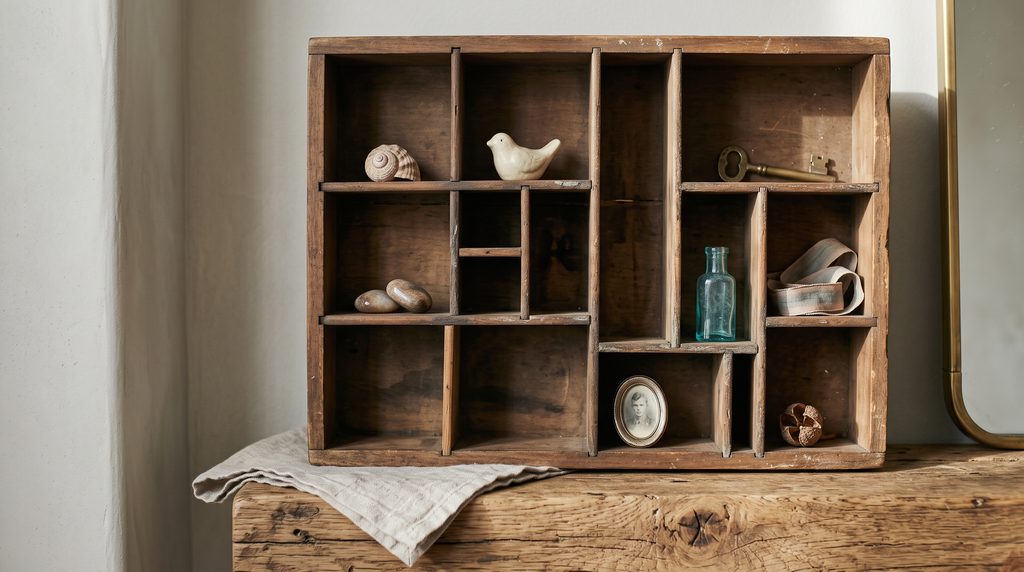
A miniature apothecary cabinet, divided wooden box or tabletop cubby gives tiny objects individual boundaries. It is ideal for shells, carved animals, matchbooks and inherited pieces that disappear on a standard shelf.
Use about two-thirds of the openings and vary the scale: one cubby can hold a larger piece while another contains a pair. Place the unit on a dresser, console or sturdy desk so it needs no wall attachment. If every compartment is filled, the display starts to resemble retail stock.
3. Lean a Vintage Printer’s Tray Against the Wall
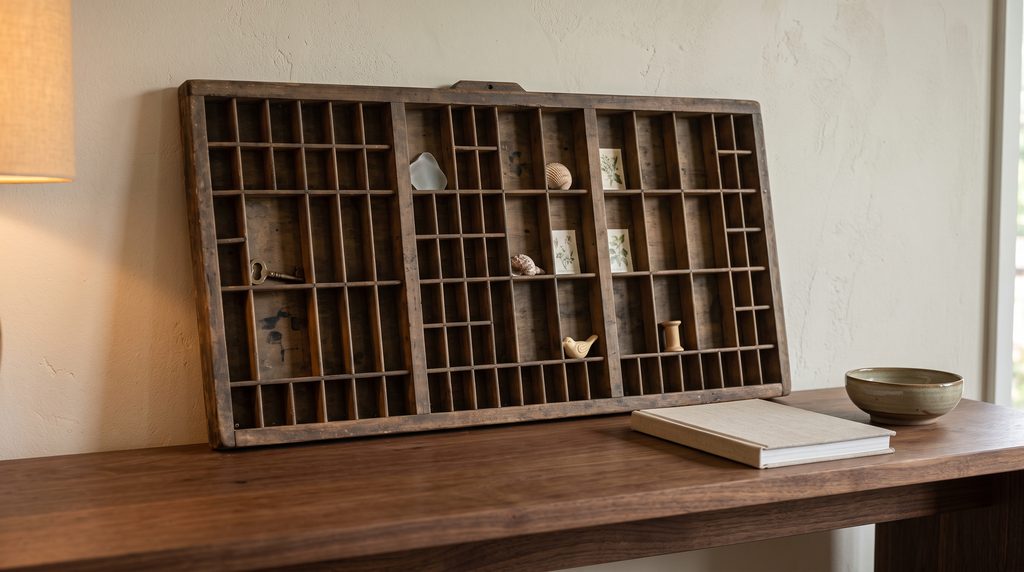
Old printer’s trays are made for tiny collections, but they do not have to be mounted. Choose one with a flat base and lean it on a deep dresser or console, well away from the edge.
Fill the compartments unevenly and avoid heavy glass that could fall forward. If you are styling an awkward area, my renter-friendly corner wall decor ideas include floor-supported arrangements that continue around a corner without drilling.
4. Make a Furniture-Backed Picture Ledge
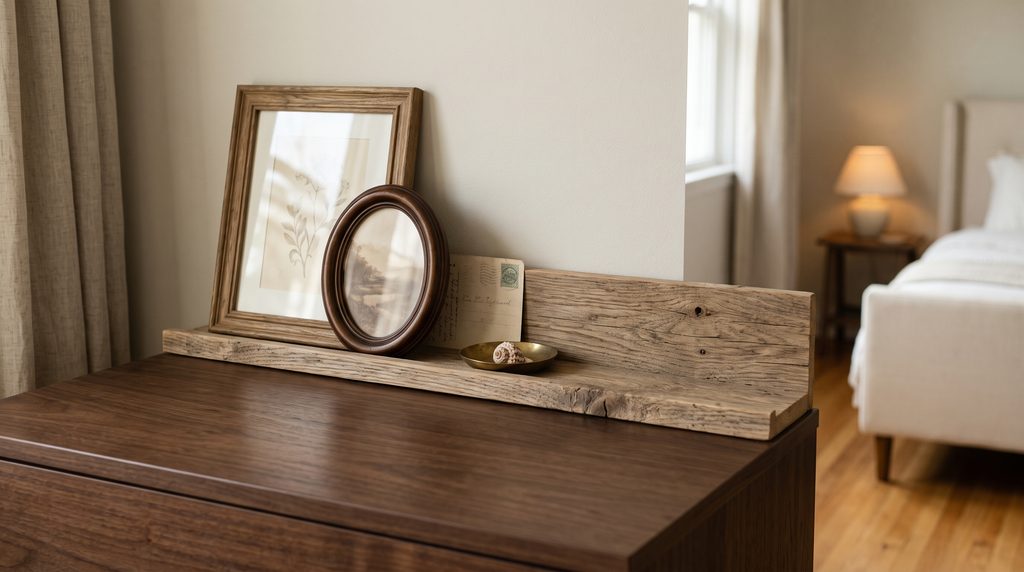
A narrow picture ledge can sit on the back edge of a substantial console, dresser or desk instead of being screwed into the wall. The furniture must be deep and stable enough to prevent shifting.
Use two small frames, one shallow dish and perhaps a postcard tucked behind them. Slight overlap creates depth without adding more objects. I like this renter solution because the entire arrangement lifts away in seconds when the room needs to feel quieter.
5. Put a Shadow Box on a Small Easel
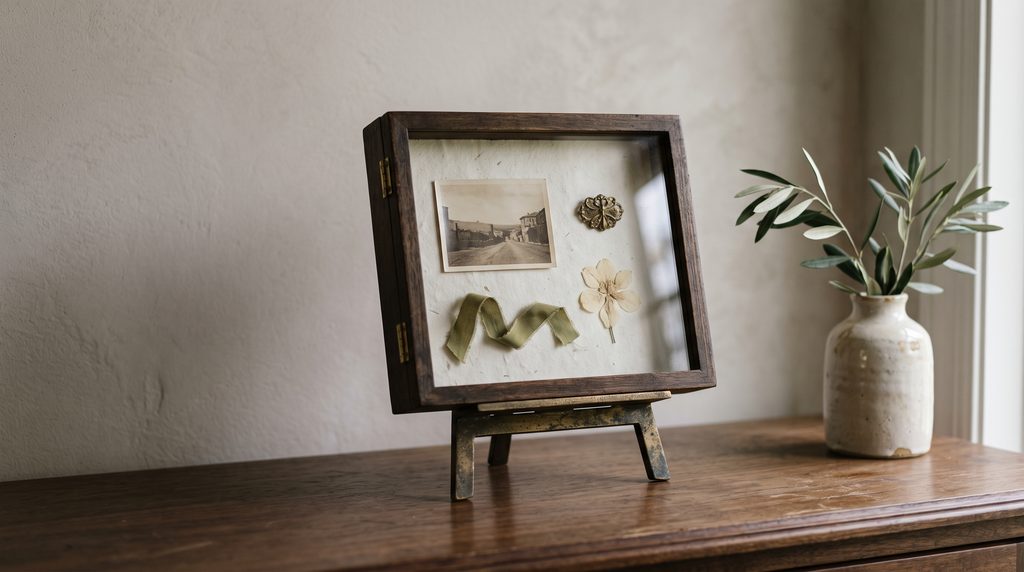
A front-opening shadow box becomes renter-safe when it sits on a tabletop easel. Use it for one contained story: a ticket with a photograph, a brooch with an old letter or souvenirs from one trip.
The front keeps off dust and stops separate pieces becoming visual confetti. Keep it toward the back of sturdy furniture and out of strong sunlight. The Library of Congress warns that intense light can damage sensitive collection materials, so copies are safer than originals in a bright room.
6. Create Height With a Tiered Riser
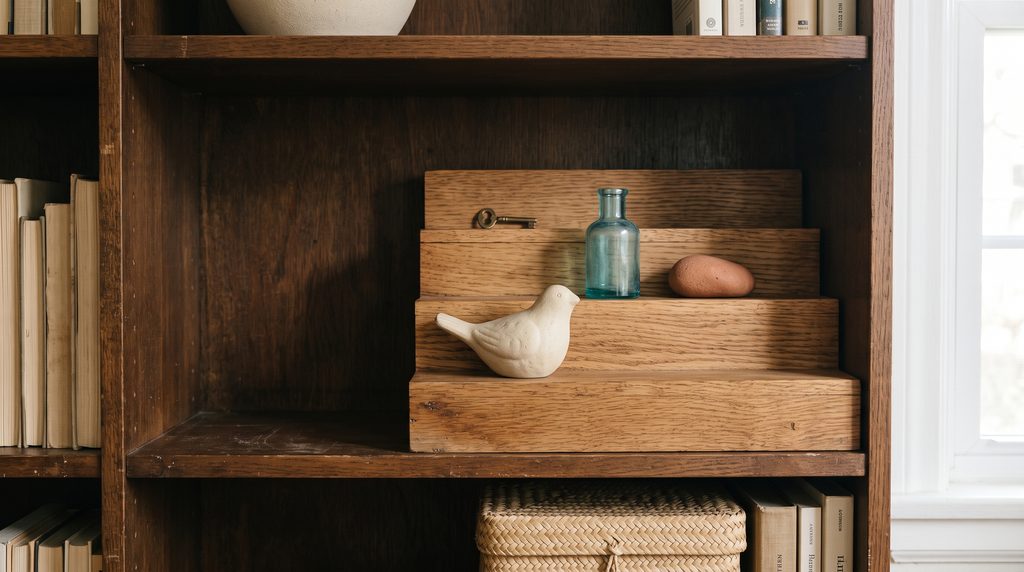
A spice rack, dessert stand or stair-step organizer can turn a deep shelf into a readable display. Put the largest item on the lowest level, a medium piece behind it and the smallest on top.
Limit the palette to two or three colors. If the objects are patterned, use a plain wood or cream riser. Try a stand from your kitchen before buying an organizer; trinket shelf decor on a budget works best when ordinary objects are reassigned rather than replaced.
7. Corral a Micro-Collection in a Shallow Tray
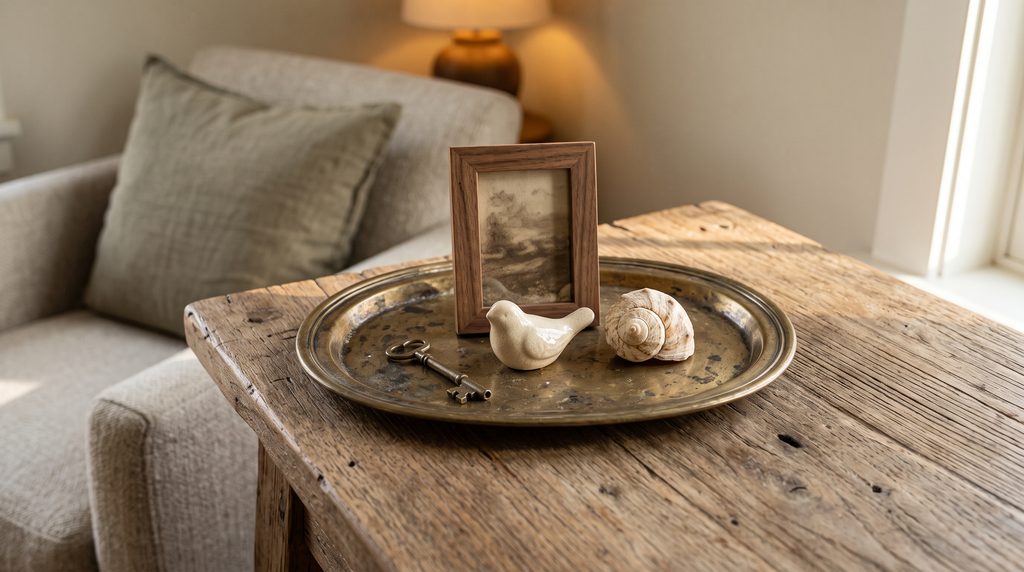
A tray is the easiest way to make unrelated pieces read as one group. Place one vertical object at the back, one low object in front and one tiny accent to the side. Three to five pieces are enough, and a visible patch of tray should remain exposed.
The display also lifts away for easy cleaning. If the entire apartment feels cluttered, use my small-space storage guide before trying to style every loose item.
8. Feature One Story Under a Glass Cloche
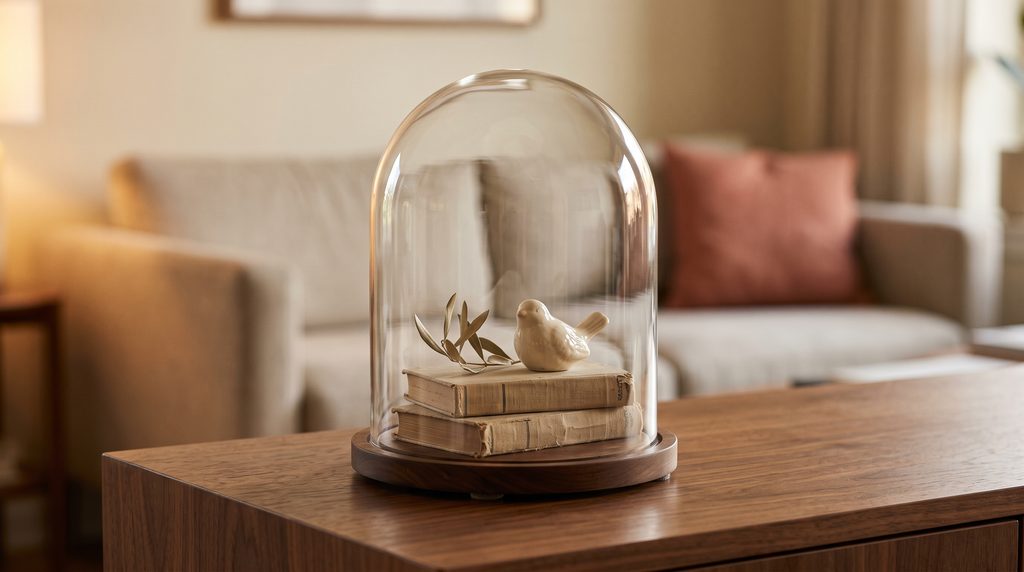
A glass cloche or secondhand cake dome turns an inexpensive object into a focal point while limiting quantity. Display a ceramic figure with a dried sprig, sea glass or one vintage ornament on two old books. Empty air inside the glass is part of the design.
Keep the cloche on a stable, low surface. If children or pets use the room, substitute acrylic or skip this idea. Renter-safe should also mean household-safe.
9. Support a Grid Panel From the Desk
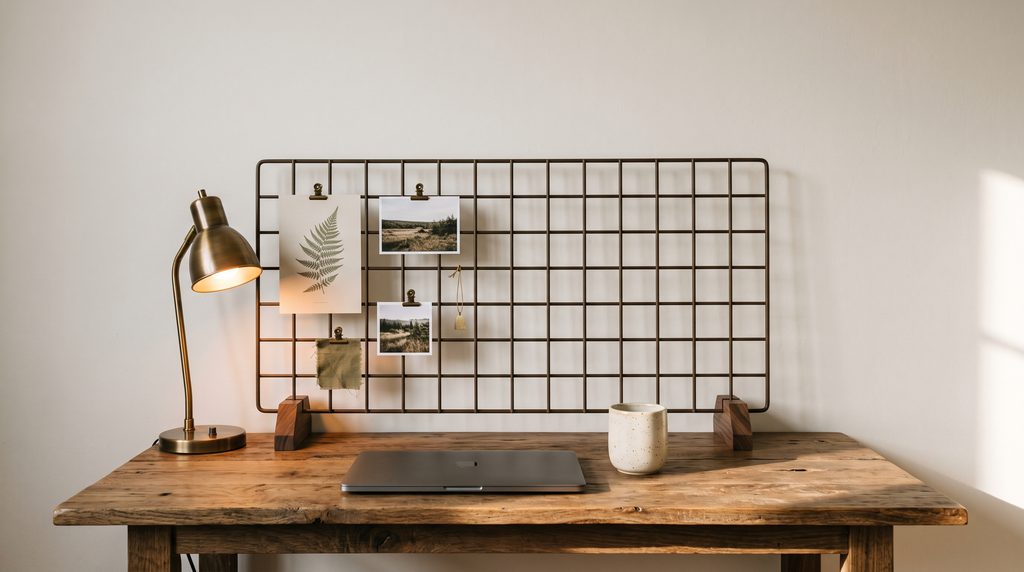
A small metal or wood grid can stand on two feet at the back of a desk, vanity or console. Clip on postcards, lightweight photographs and fabric swatches without touching the wall.
Keep the middle open. One larger card, two smaller photographs and a single charm are enough. Repeating the same clip finish connects mixed paper pieces, and the display can change in minutes without adhesive or another frame.
10. Use an Over-the-Door Display Rail
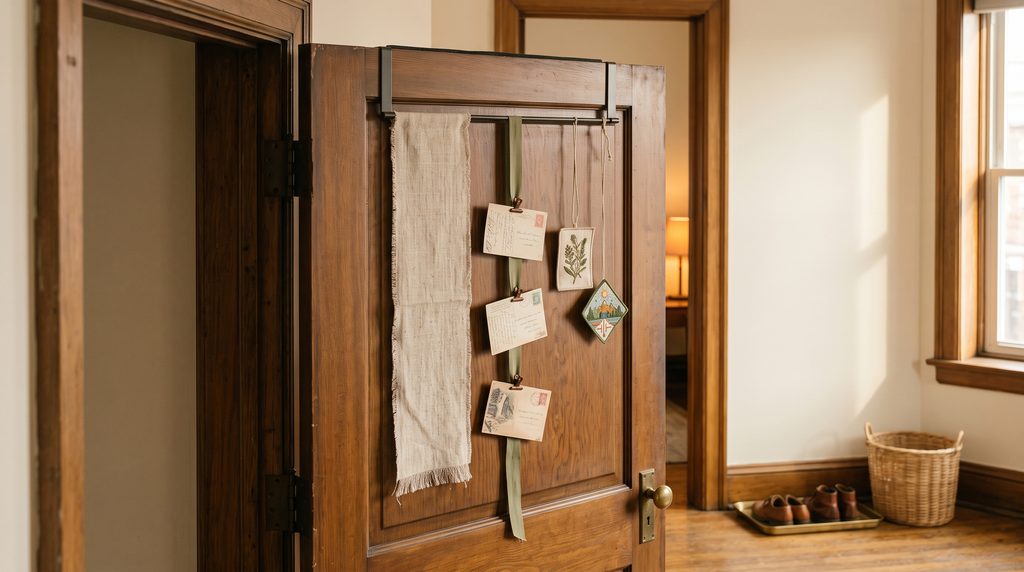
An over-the-door rail can hold a light textile, postcards clipped to ribbon or a narrow organizer for unbreakable collectibles. Check the clearance first: the door must close smoothly, the rail needs protective padding and nothing should interfere with hinges or handles.
Use this for patches, ribbons and paper collections—not glass, ceramics or heavy frames. Keep the arrangement short enough that it cannot swing into the wall.
11. Build a Tension-Pole Corner Display
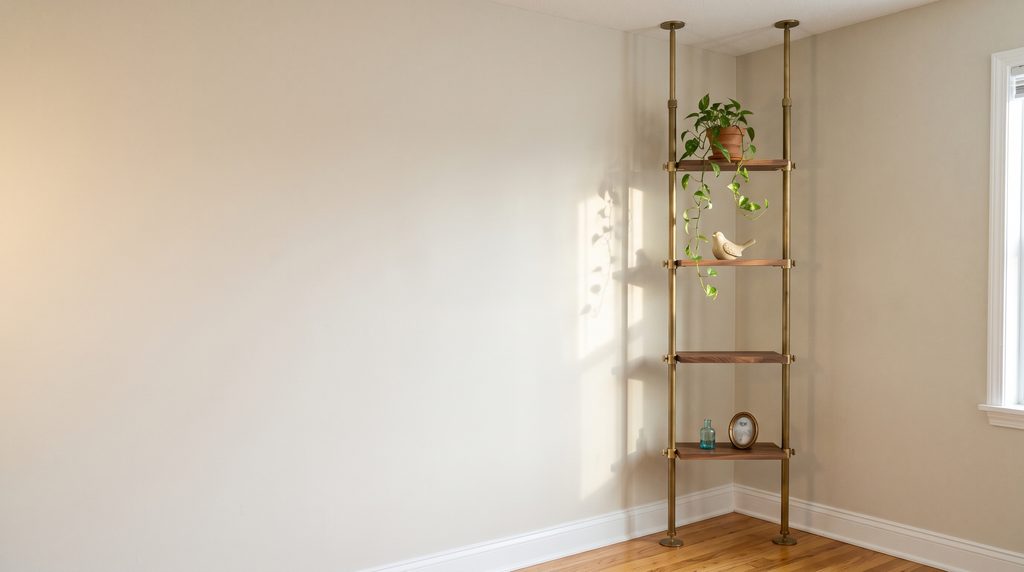
A floor-to-ceiling tension display uses compression pads instead of screws, making it useful where furniture will not fit. Choose a purpose-built system with clear weight limits.
Display lightweight pieces, spread weight across lower shelves and leave one-third empty. Measure carefully, follow the installation instructions and recheck tension periodically. Never improvise a heavy display from a shower rod; the mechanism must be designed for vertical floor-to-ceiling use.
12. Style a Freestanding Decorative Ladder
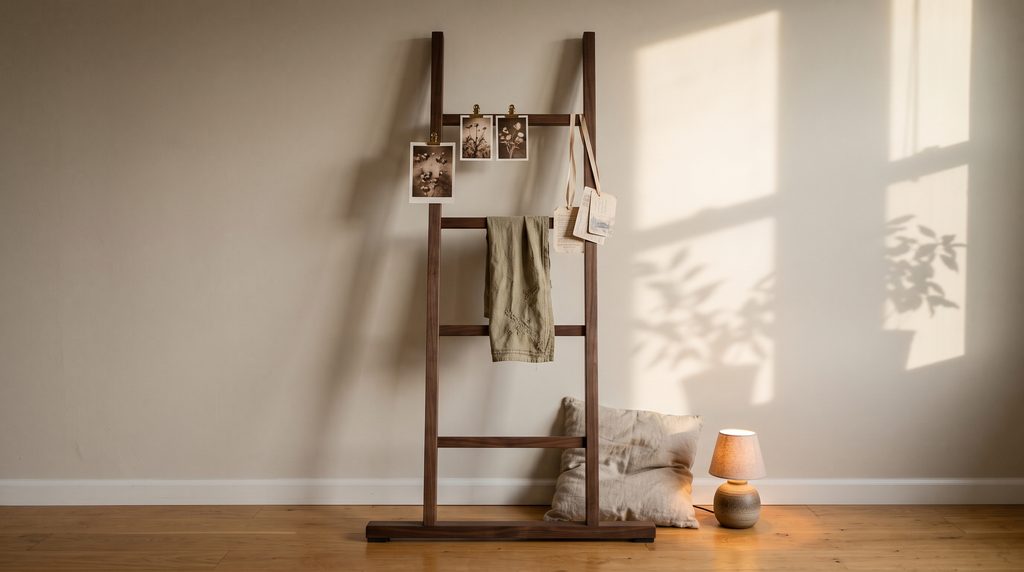
A decorative ladder can support clipped photos, a small textile and lightweight hanging pockets. Choose one with broad feet and floor protectors; it is not for climbing.
Keep fragile objects off it and preserve the lower third so the floor remains calm. This works best for postcards, embroidery and travel mementos. Repeat one color—terracotta, olive or indigo—to make varied keepsakes feel connected.
13. Turn a Rolling Cart Into a Curio Station
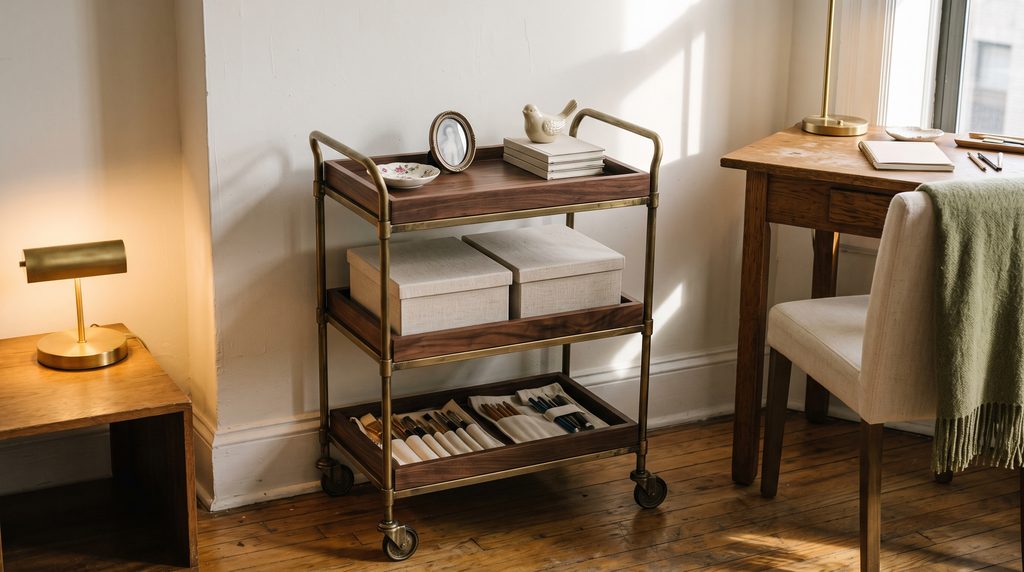
A rolling cart works well when the collection is tied to a hobby. Keep practical supplies in closed boxes below and reserve only the top level for finished miniatures, pottery or journaling pieces.
For a nostalgic version, choose wood or aged brass and borrow from my Grandmacore decor guide. One floral dish and one old frame are more convincing than a cart full of themed purchases.
14. Choose a Low, Secondhand Curio Cabinet
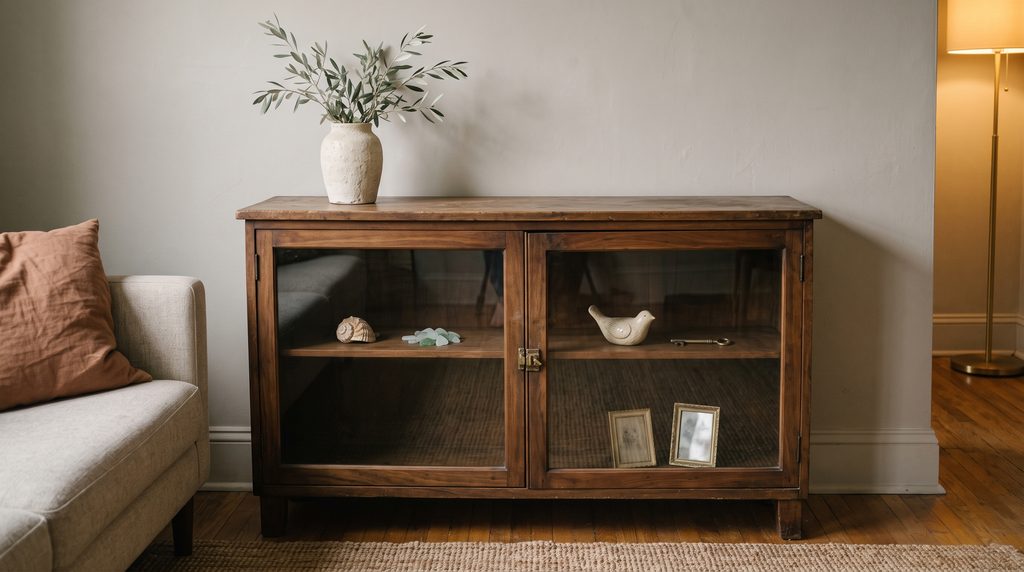
For fragile or dust-sensitive pieces, look for a low, wide cabinet rather than a tall tower. Group objects by story, keep heavy pieces low and leave space around every group.
Safety outranks a no-drill claim. The U.S. Consumer Product Safety Commission recommends securing furniture with shelves, drawers or doors. Review its Anchor It guidance and follow the manufacturer. If proper anchoring is not permitted, choose a lower, more stable display.
15. Use a Window Ledge for Light-Safe Objects
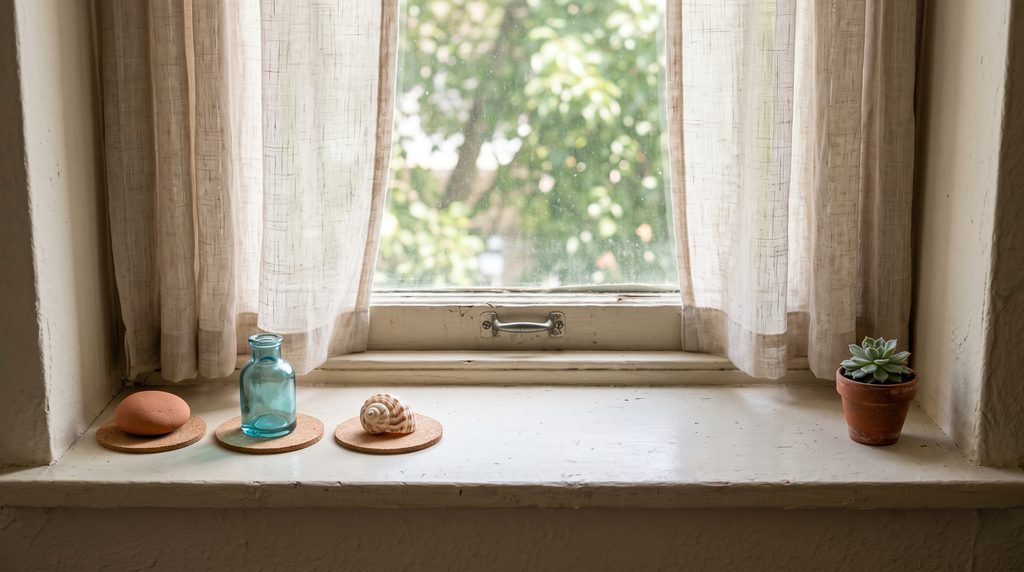
A deep window ledge can hold stones, colored glass, small planters or inexpensive ceramics. Keep the center partly open so the window remains usable, and never block latches, ventilation or an escape route.
Use felt or cork pads only if they will not transfer dye or residue. Photographs, textiles and meaningful paper belong on a shaded shelf because sunlight can fade them.
16. Create a Seasonal Rotation Shelf
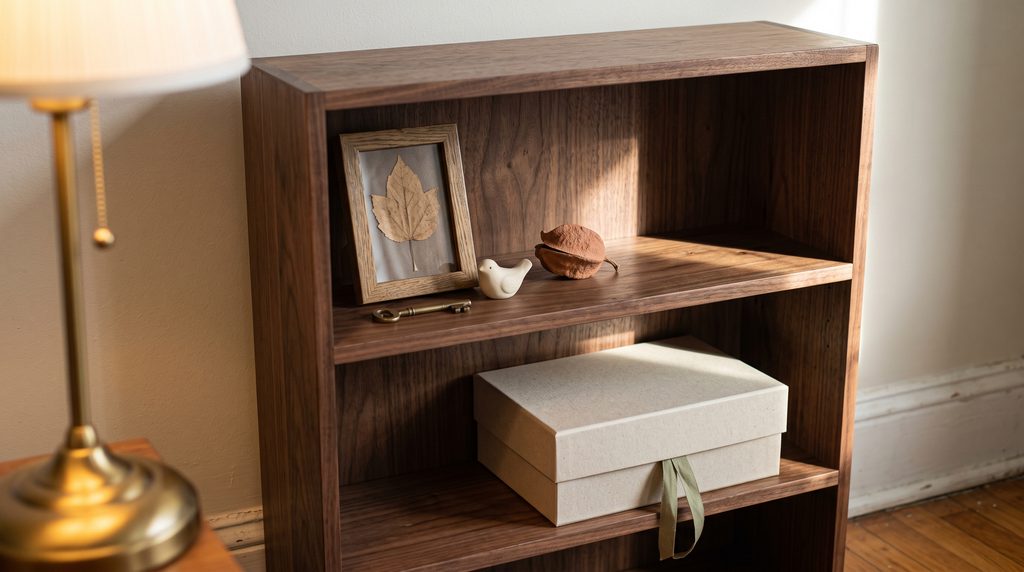
Choose one shelf, tray or cubby as the permanent stage, then rotate groups from a labeled box every two or three months. Show shells in summer, framed botanicals in fall and inherited ornaments in winter.
This is my favorite option for a growing collection. Everything gets a turn, nothing competes all year, and the shelf remains interesting because it is not carrying your entire history at once.
How to Keep a Curio Display Collected, Not Cluttered
Even good trinket shelf decor on a budget can become noisy if every piece has the same visual weight. Before adding anything, run this five-minute edit:
- Remove duplicates. Similar objects make more impact as a tight group or in rotation—not scattered everywhere.
- Vary height deliberately. Use a book or small box as a riser rather than buying another stand.
- Repeat one material. Brass, dark wood, cream ceramic or clear glass can connect unrelated finds.
- Protect the silhouette. Every group should have a recognizable outline when viewed from across the room.
- Photograph the shelf. A photo makes crowding obvious in a way standing directly in front of it does not.
- Stop at two-thirds full. If the final third disappears, remove the least meaningful item.
I also avoid filling a shelf with objects bought only to complete a look. That defeats the emotional value of a trinket display. If you need affordable pieces with real character, start with the sourcing checklist in my thrifted decor trends guide and buy slowly.
Renter-Safe Setup and Move-Out Checklist
“Renter-friendly” is not a guarantee printed by the universe. Wall finish, humidity, product age, weight and installation technique all matter. Use these precautions:
- Read your lease before attaching anything.
- Favor furniture-supported, tabletop and floor-supported displays first.
- Test any removable adhesive in an inconspicuous area and follow its instructions exactly.
- Keep fragile and heavy objects low.
- Do not block doors, windows, vents, switches or walkways.
- Keep original hardware and packaging in a labeled move-out box.
- Photograph walls and furniture before installation.
- Remove adhesives slowly and in the direction specified by the manufacturer.
For more deposit-conscious decorating methods, use my complete guide to renter-friendly decor ideas. The safest approach is always the least invasive method that produces the effect you need.
Frequently Asked Questions
What is a trinket shelf?
A trinket shelf is a small shelf, cubby, tray or display structure used for miniature collectibles, keepsakes, figurines, photographs and other meaningful objects. It can be wall-mounted, furniture-supported or completely freestanding.
How do I display trinkets without looking cluttered?
Leave roughly one-third of the display visually empty. Use one anchor object, one smaller supporting group and a quiet gap between them. Repeat one color or material and rotate excess pieces rather than displaying everything simultaneously.
What can I use instead of a wall-mounted shelf in a rental?
Use an existing bookcase shelf, tabletop cubby, leaning printer’s tray, picture ledge supported by furniture, shadow box on an easel, tension-pole display, decorative ladder or small low curio cabinet. These create display space without conventional floating-shelf installation.
How many objects should be on a small trinket shelf?
There is no universal number, but three to seven objects usually work on a small shelf when they are divided into two visual groups. Scale and spacing matter more than quantity. Stop when approximately one-third of the surface still reads as open.
How do I decorate a trinket shelf for free?
Use objects you already own and an existing shelf, tray, stack of books or shallow drawer. Group items by story or material, vary their height and rotate anything that does not fit. The most important improvement—leaving one-third empty—costs nothing.
Are adhesive shelves safe for renters?
No adhesive product is universally safe for every painted surface, and weight ratings depend on correct installation. Test first, follow the manufacturer’s surface and removal directions, and avoid using adhesive shelves for valuable, heavy or breakable objects. Furniture-supported displays carry less wall risk.
Final Thoughts
Trinket shelf decor on a budget should make a rental feel more like you, not make the room feel smaller. Start with a surface you already own, choose one meaningful anchor and build one small supporting group around it. Then protect the empty third.
That gap may feel unfinished for the first five minutes. Give it time. It is the part that allows the eye to notice the old photograph, the tiny ceramic bird or the shell you carried home because it reminded you of somewhere worth remembering.
If you want to continue the collected look beyond one shelf, explore my budget-friendly small apartment decor ideas for ways to repeat the same colors and materials around the room. The goal is not to make every surface busy. It is to let a few personal things tell the story clearly.
Your collection is not the clutter. The missing space around it is.
You May Also Like
Afrohemian Wall Decor for Re ...
26 September 2026
12 Comfy Reading Chairs for ...
25 September 2026
New Year, No Spend: A 20-Ste ...
12 September 2026
Popular Post


Leave a Comment